Water’s Hidden Energy: Ancient Mysteries, Cosmic Explosions, and the Key to Humanity’s Infinite Power
18 NOVEMBER 2025
The Ordinary Mystery of Water
Today, let’s talk about one of the most ordinary things in the world: water.
We see it everywhere, yet the truth is we still don’t fully understand it. Scientists continue to puzzle over its quirks, and one of the strangest lies in how it behaves when it freezes.
Why Ice Floats
Most substances shrink as they cool. Gas condenses into liquid, liquid solidifies into solid, and the molecules pack closer together. But water is different. Once it slips below zero degrees Celsius and freezes, it expands instead of contracting. The molecules lock into a crystal structure that takes up more space, making ice less dense than liquid water. That’s why ice floats.
This simple fact has saved life on Earth more than once. During ice ages, when the planet plunged into deep freezes, lakes and oceans froze, but only at the surface. The ice formed a protective lid, insulating the water beneath and keeping it from freezing solid. Sunlight could still filter through, allowing fish, plants, and countless tiny organisms to survive. Without floating ice, Earth’s story might have ended long ago.
The Miracle of Supercooled Water
Even the freezing point of water isn’t as fixed as we think. Under normal conditions, it freezes at zero degrees Celsius, but if cooled very carefully, water can stay liquid far below that, sometimes as low as –48 degrees. This is called supercooled water, and scientists still don’t fully understand how it resists crystallising for so long.
Strange Forms and Hidden Personalities
Not all ice looks the same under a microscope. Beyond the familiar crystal structure, researchers have discovered forms where the molecules are disordered, almost like a frozen liquid pretending to be solid. And water itself seems to carry more than one “personality.” A team at Stockholm University found that it can behave like two different liquids, each with its own density and structure, switching between them depending on conditions.
Adding to the intrigue, Oxford researchers reported in 2017 that somewhere between 40 and 60 degrees Celsius, water undergoes a subtle structural shift. Water below 40 is not quite the same as water above 60. For something so ordinary, it never stops surprising us.
Snowflakes: Nature’s Masterpieces
And then there are snowflakes, each one a tiny miracle. Wilson Bentley, a farmer’s son born in Vermont in 1865, was the first to reveal their uniqueness. At fifteen, given a microscope by his mother, he became captivated by the crystals drifting from the sky.
With a camera attached to that microscope, an extraordinary innovation for his time, Bentley spent his life photographing over 5,000 snowflakes. Not once did he find two alike. He never married, living a modest life, but he poured his devotion into this quiet work. Thanks to him, we have the first evidence that every snowflake is a one-of-a-kind masterpiece.
A Miracle Hiding in Plain Sight
Put it all together: ice that floats and sustains life, water that resists freezing far below zero, hidden personalities within its molecules, and snowflakes that carry their own unique design. Suddenly, water no longer feels ordinary. It is one of nature’s greatest mysteries, hiding its secrets in plain sight.
Where Did Earth’s Water Come From?
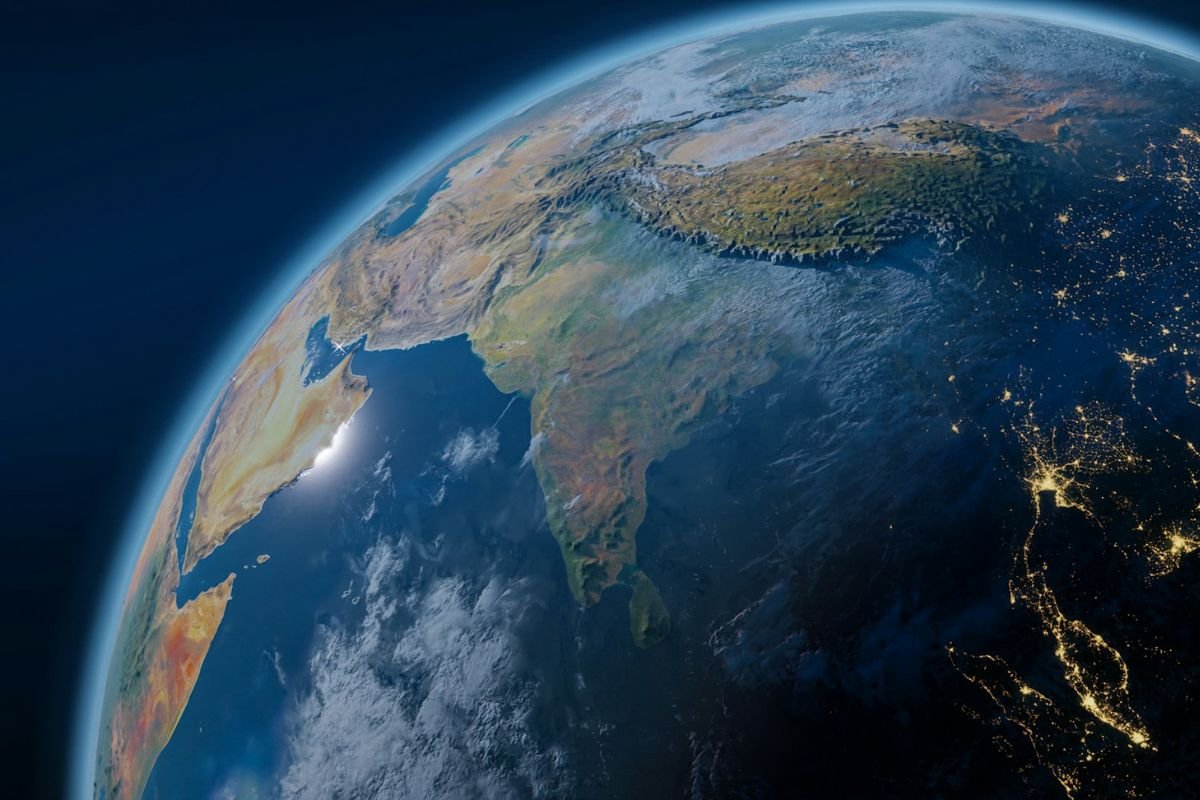
The story of Earth’s water is still one of science’s great unsolved mysteries. No one can say for sure how our planet ended up so blue, but two main theories tend to surface.
Water from the Start
One idea is that water was here from the very beginning, locked deep inside the rocks and minerals that first built Earth. As the young planet cooled, that hidden water escaped, eventually spilling out to form the oceans. If that’s true, then water, and maybe even the potential for life, has been part of Earth’s story since day one.
Water from the Sky
The other theory is that Earth started out dry, and its water arrived later, carried here by icy asteroids and comets crashing into the planet billions of years ago. Even today, meteorites that fall to Earth sometimes contain traces of water, so it isn’t hard to imagine ancient impacts delivering vast oceans’ worth.
The truth may be a little of both: some water from within Earth, some delivered from beyond.
Why Only Earth?
What makes this puzzle even more intriguing is that Earth isn’t the only rocky planet in our neighborhood. Mercury, Venus, Earth, and Mars all formed under similar conditions. Yet only Earth ended up overflowing with oceans, rivers, and rain. Mars still holds ice, and Venus may once have had seas, but compared to Earth, their water is only a faint echo. Somehow, against the odds, Earth became the water-rich exception.
A Cosmic Gift
And of course, the mystery only deepens if we ask where those comets and asteroids got their water in the first place. At some point, the trail vanishes into the unknown. In that sense, Earth’s water still feels like a cosmic gift we don’t fully understand. Some even like to wonder, half-seriously, whether water was placed here on purpose.
When you think about it like that, life starts to feel a little less like an accident, and a little more extraordinary.
Ancient People May Have Understood Water Better Than We Do
Even with all our science and technology, water still holds mysteries we can’t fully explain. Strangely enough, it sometimes feels like ancient people might have grasped more about its power than we realise.
The Enigma of Tula
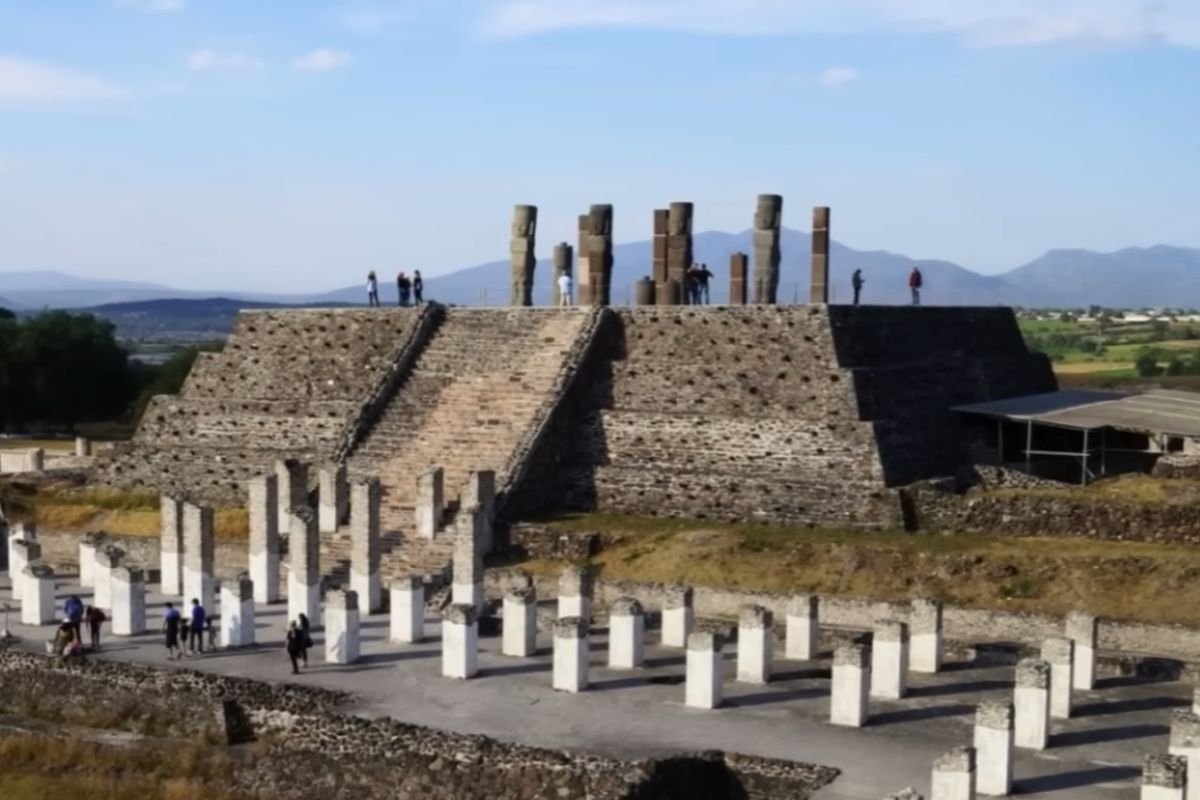
Take the Tula ruins in central Mexico, built about a thousand years ago by the Toltecs, whose name is often translated as “master builders.” The site features grand structures, the most famous being “Pyramid B,” topped with four towering stone figures known as the Atlantean warriors. Standing over four meters tall, they’re imposing even today.
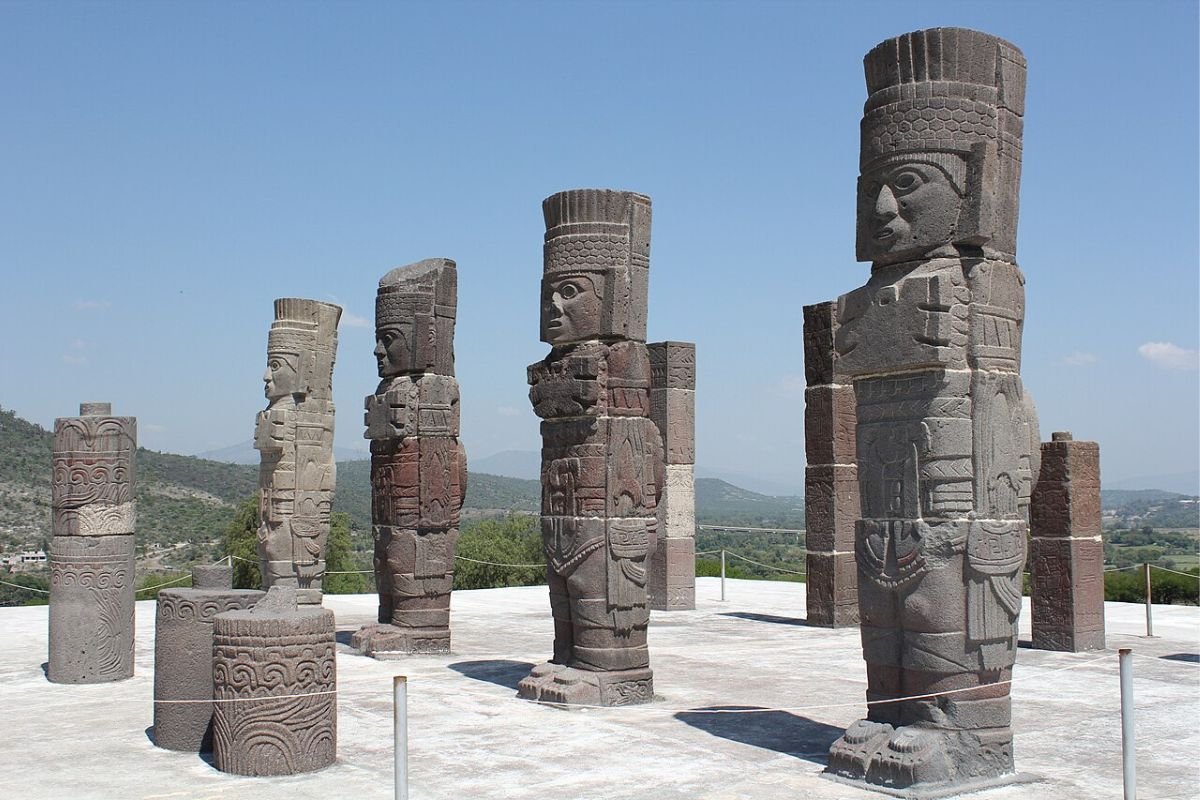
What really captures attention, though, are the objects these stone warriors hold. Archaeologists usually describe them as spear-throwers or ritual tools. But to modern eyes, they look oddly advanced. Their chest plates resemble armour, their headdresses resemble headsets, and the items in their hands sometimes get compared to laser guns or futuristic devices. It’s not surprising that locals and alternative thinkers often wonder if they were more than symbolic carvings.
A Myth Written in Stone
The pyramid is also called the Temple of the Morning Star, tied to the deity Quetzalcoatl, the Feathered Serpent. In Mesoamerican mythology, Quetzalcoatl represented wisdom and light, a cultural hero who challenged the destructive trickster-god Tezcatlipoca. Their mythical struggle was seen as light versus darkness, knowledge versus chaos. According to legend, Quetzalcoatl eventually departed, promising to one day return. For the Toltecs and later the Aztecs, temples like Tula weren’t just stone monuments, they were reminders of this cosmic story.
Lost Knowledge, or Timeless Imagination?
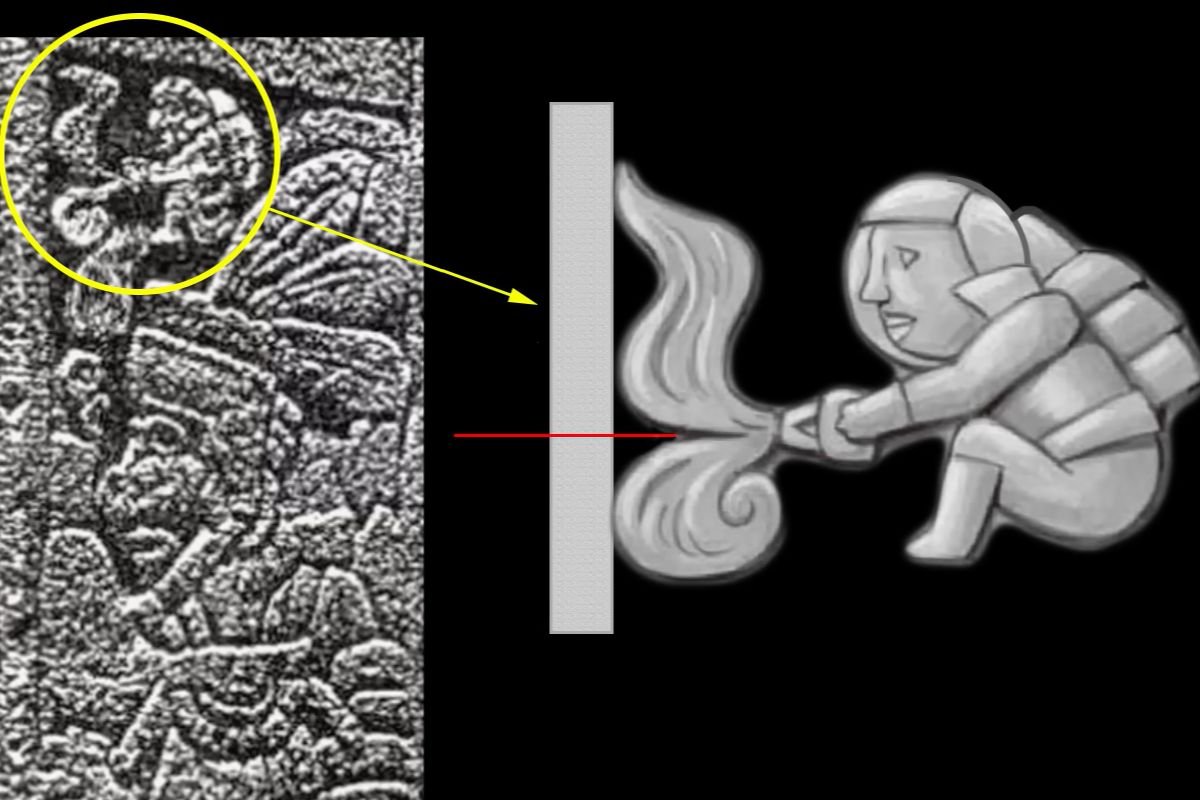
Local traditions and modern interpretations sometimes claim that the objects carried by the Atlantean warriors weren’t merely ceremonial. Legends whisper of tools powered by water, capable of cutting stone or even emitting beams of light. Intriguingly, nearby carvings do show figures using similar objects in scenes that resemble devices no larger than a modern handgun. Whether these were depictions of lost technology, symbolic myths, or simply creative artistry, they continue to spark curiosity.
Maybe the Toltecs really did know something about water, and about energy, that we’ve forgotten. Or maybe their imagination, like ours, was always reaching beyond the ordinary, blending myth, science, and possibility in ways that still leave us in awe today.
The Great Pyramid and the Puzzle of Stone
Now stop and think about it: the Great Pyramid of Giza is made of more than two million stone blocks. Most weigh between two and three tons, and some are even heavier. We often hear about how they were hauled and stacked, but the real puzzle is how those blocks were cut and shaped with such precision in the first place.
Originally, the pyramids weren’t the rugged monuments we see today. Their outer casing stones, most of which have long since vanished, were polished to a mirror-like finish. Imagine sunlight blazing off the smooth white surface, so bright it could be seen for miles. The builders weren’t just piling rocks; they were creating something astonishingly refined, almost dazzling in its perfection.
Lost Tools, Lost Knowledge?
Mainstream archaeology tells us these feats were accomplished with simple copper chisels and stone hammers. But some legends, and a few alternative theories, whisper about something far more advanced, tools powered by water, capable of generating beams of energy. In other words, something not unlike laser cutters.
If such tools existed, they wouldn’t just carve stone. Some say they could even melt it. And if you can melt stone, suddenly metallurgy, refining metals on a large scale, feels a lot more plausible. Which brings us to another mystery.
Tutankhamun’s Golden Legacy
When Tutankhamun’s tomb was discovered, it stunned the world with its dazzling treasures. His golden mask alone has become an icon. But what often gets overlooked is the sheer volume of refined gold buried with him. Could the ancient Egyptians really have produced so much with the simple techniques we credit them with? Or were they working with methods, perhaps even tools, that have been lost to time?
Water as Hidden Power
And then there’s the question of energy itself. If these mysterious tools really did run on water, what does that suggest? Water isn’t just the basis of life, it also carries immense untapped energy.
Some thinkers even connect this to unexplained events in our more recent history. Take the Tunguska explosion of 1908 in Siberia, which flattened over 2,000 square kilometers of forest with a force hundreds of times greater than the Hiroshima bomb. Yet no crater was found, no radiation left behind. It wasn’t a nuclear blast. It didn’t behave like a meteor strike. So what was it? Could it have been a natural, violent release of water’s hidden energy, an event we still don’t fully understand?
More Than Meets the Eye
The deeper you look into these mysteries, the more water seems to hold secrets we’ve only begun to uncover. And maybe, just maybe, the ancients knew how to tap into them.
Water and the Power of Destruction
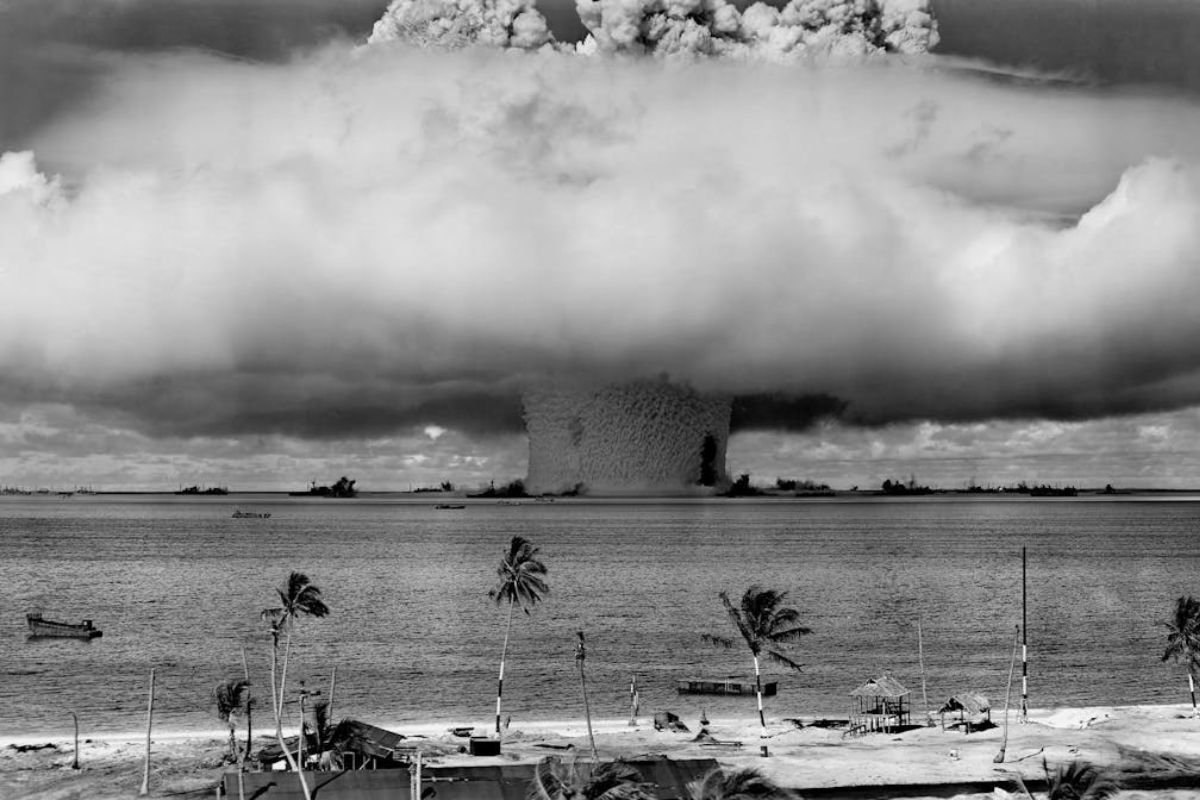
When we think of nuclear bombs, the explanation always comes back to uranium or plutonium. Split their atoms apart, we’re told, and you unleash staggering amounts of energy. That much is true. But there’s another idea out there, a modern urban legend, that asks a daring question: what if the real force behind these explosions isn’t uranium at all… but water?
Here’s how the story goes. Under extreme heat and pressure, water can break apart into hydrogen and oxygen. Both gases are highly combustible. When they recombine, they release energy as they turn back into water. Now picture this cycle happening again and again: splitting, igniting, recombining… in fractions of a second. The result? A runaway reaction that could amplify the destructive power far beyond what uranium alone can produce.
In this view, uranium isn’t the fuel at all, it’s just the match. Water is what burns.
Skeptics argue that nuclear fission alone explains the fireball. But here’s the puzzle: once uranium scatters into smaller fragments, the chain reaction should stop almost instantly. If that’s the case, then why do we see such massive blasts? Supporters of the “water theory” suggest that superheated water vapour inside the explosion might keep the reaction going, feeding into its own self-sustaining cycle.
Parallels in Nature
This is where things get even stranger. Consider volcanic eruptions. When a volcano blows, it often produces the same mushroom-shaped clouds we associate with nuclear bombs. But there’s no uranium involved, only heat, pressure, and underground water being released with violent force. The resemblance makes some wonder: is water itself capable of unlocking destructive power on an unimaginable scale?
And again, there’s the Tunguska explosion of 1908. In a remote Siberian forest, a blast flattened over 2,000 square kilometers of trees. The shockwave circled the globe. Yet no crater was ever found, and no radioactive residue was left behind. One theory suggests a water-rich meteorite entered Earth’s atmosphere. As it burned, its internal water could have split into hydrogen and oxygen, then ignited in the same rapid-fire cycle described in the “water theory.” The result? A cataclysm powerful enough to rival nuclear fire, without leaving a trace of radiation.
The Double-Edged Nature of Water
Whether or not the science holds up, the thought lingers: could something as ordinary, familiar, and life-giving as water also hide within it the potential for unimaginable destruction? We like to think we understand water, it covers our planet, flows through our bodies, sustains every living thing. But maybe, just maybe, we’ve only scratched the surface of its true power.
Water, Extinction, and Infinite Energy
It’s not only the Tunguska explosion that raises eyebrows. Some even wonder if the extinction of the dinosaurs could be tied to the same hidden force.
We’ve all heard the familiar story: an asteroid slammed into Earth 66 million years ago, leaving behind the Chicxulub crater in Mexico’s Yucatán Peninsula. The impact theory explains much, but it still leaves questions. Could a single strike really unleash such global devastation?
Some suggest the answer lies not only in the asteroid itself, but in what it triggered. Picture the asteroid colliding with the ocean. The intense heat and pressure could have driven seawater into the same runaway cycle described earlier, splitting into hydrogen and oxygen, igniting, recombining, and repeating in a chain reaction far greater than the asteroid’s impact alone. In that view, the asteroid wasn’t the true killer. It was the spark. Water was the fuel.
Ancient Clues and Modern Possibilities
This idea brings us back to the enigmatic stone figures at the Tula ruins. Could they be more than carvings, could they be hints of a forgotten technology, an ancient understanding of water’s hidden energy?
If such a technology were ever rediscovered, the implications would be staggering. Today, we rely on coal, oil, and nuclear power, finite or polluting sources. Even electricity, “clean” as it seems, often traces back to burning fossil fuels. But water? It is abundant, renewable, and everywhere. Unlocking its full potential wouldn’t just mean sustainable energy. It could mean limitless energy.
The thought doesn’t end on Earth. Space exploration, too, faces the problem of fuel. You can’t carry endless supplies of oxygen into the void. But water carries hydrogen and oxygen within itself. A single jug could mean both fuel and drinking water, an explorer’s dream.
And what if the technology became small, even handheld? The carvings at Tula depict devices no larger than a modern firearm. Imagine scaling them down further: pouring a few drops of water into your phone and watching it run for decades without a single recharge. That’s a revolution in how we think about power itself.
The Power Beneath Our Noses
Water has always been with us, shaping life and sustaining it. We see it as ordinary, but maybe it’s anything but. Perhaps the ultimate key to humanity’s future has been flowing under our noses all along.
And if that’s true, then whoever understands water best may hold the greatest power on Earth, maybe even in the universe.