Why You Look Different in Photos: Psychology, Mirrors, and Camera Distortion
24 FEBRUARY 2026
Why We Look Different in Mirrors and Photos: Understanding Your Two Faces
Loving beauty is simply part of being human. Most of us have experienced that baffling moment when we glance in the mirror and think we look perfectly fine, then take a photo and immediately wonder, “Why do I look so different in photos?” It feels oddly universal, almost like a private frustration we all share.
When we try to understand how we actually look, we usually rely on two things: mirrors and cameras. Yet the two versions of us rarely match. Our reflection often feels softer and more familiar, while photos can seem harsher, almost as if they belong to someone else entirely. Why does this happen? Why do we look so different in photos? And which version comes closest to how we truly appear?
This question sits at the intersection of psychology, self perception, lighting, camera distortion, lenses, and the strange way our minds grow attached to certain images of ourselves. There is real comfort in that familiar reflection we see every morning, which is why anything that looks even slightly different can feel unsettling.
Before deciding which version is closer to your true appearance, it helps to understand why the mirror often feels comforting while the camera feels less forgiving.
Reason 1: Why Mirrors Feel More Familiar Than Photos
There is a fascinating psychological principle known as the mere exposure effect. It suggests that the more often we see something, the more we tend to like it. Familiarity creates comfort. Think about someone you follow online or a colleague you see every week. You might not have thought much about their looks at first, yet over time you notice yourself thinking, “They’re actually quite good-looking.” Your brain warms to what it recognises. This is part of the hidden psychological forces behind our reactions, where familiarity quietly shapes what we like and trust, often without us even noticing.
The same thing happens with your own face. You see your reflection every single day, sometimes dozens of times. You know its angles, its expressions, its familiar micro-movements. That version of you becomes your internal reference point.
So why does the person in your photos feel less flattering?
Here is the part many people forget. A mirror flips your face left to right. Photos do not. And human faces are rarely perfectly symmetrical. Even celebrities with striking features have small asymmetries. Because you are deeply familiar with your mirrored face, the unflipped version in photos looks slightly foreign. It is not worse, just different. And the unfamiliar often feels less appealing, at least at first glance. This is closely linked to how we project our expectations onto what we see, interpreting images through what feels familiar to us.
Reason 2: Why Photos Capture You Differently Than Mirrors
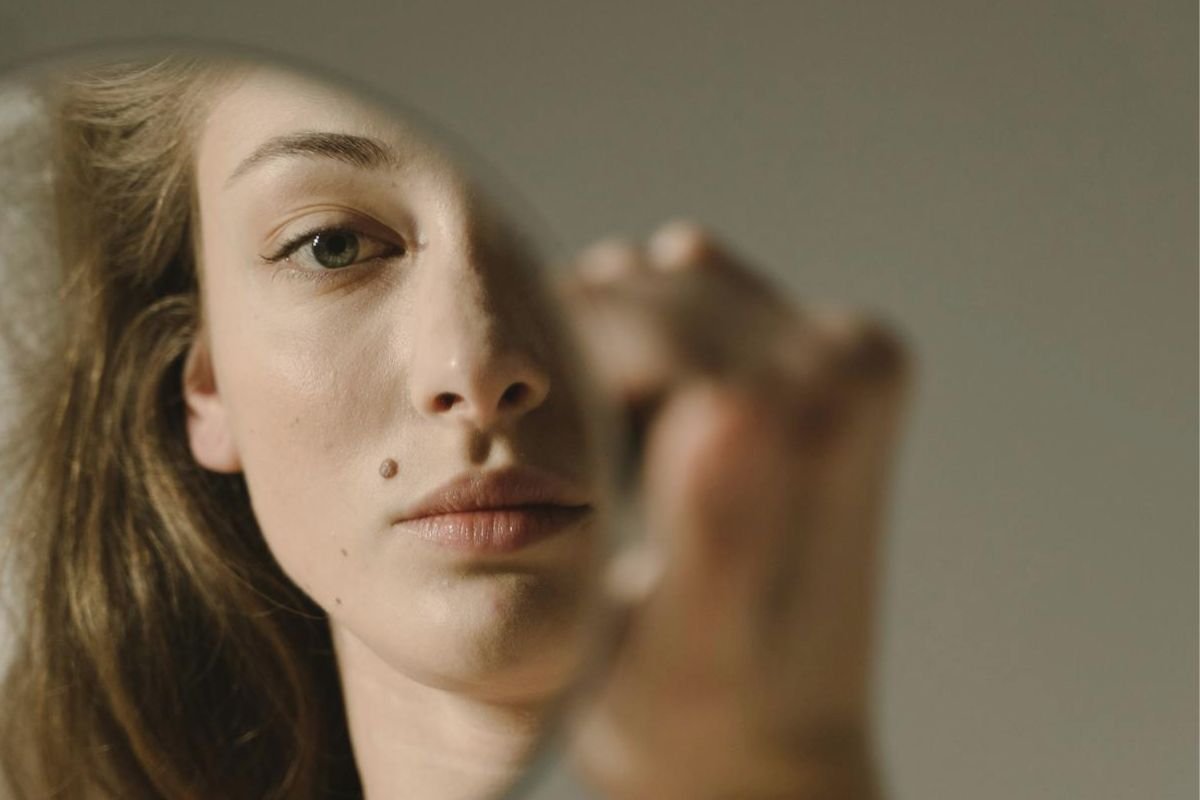
When you look in the mirror, you’re rarely motionless. Your expression shifts as you lean in, your eyes soften, you adjust your posture without thinking. In other words, your face is alive. But the moment a camera snaps, everything stops. That single frozen instant can capture you mid-blink, mid-thought, or mid-expression, often in a way that feels harsher than how you look in everyday life.
Researchers have long noted that we are far better at recognising faces in motion than in still images. We’re used to seeing people talk, smile, blink and react. No one stands in front of you like a statue. So the moving version of your face in the mirror feels natural, while the still version in a photo can seem unfamiliar or unflattering. This is something almost everyone experiences, and it doesn’t say anything about your actual appearance.
Reason 3: How Self Perception Changes What You Notice
There’s a well-known interpretation of Albert Mehrabian’s 1967 communication model that gets repeated everywhere: 7 percent words, 38 percent tone, 55 percent body language. While the original study was far more specific, the broader idea still matters here. When we interact with others, our attention does not rest on a single detail. We absorb their voice, movement, expressions, gestures and energy all at once. This is where the emotional intelligence skills that shape how we read others become important, helping us understand far more than just appearance.
Try watching the same short video several times. With each viewing, your attention drifts to different elements. Your brain naturally filters out the parts it considers unimportant. But a still photo offers no such mercy. Everything lands in front of you simultaneously, and even the smallest detail jumps out because there is nowhere else for your attention to go.
There’s something else happening, too. When you look in the mirror, you’re the director. You raise your chin, soften your eyes, shift your shoulders, tilt to the side you prefer. You instinctively choose the version of yourself that feels most like you. A camera, however, doesn’t wait for you to pick your angle. It captures whatever happens to be there, whether it’s flattering or not. And as everyone knows, a single angle can make all the difference in the world.
In real life, though, we often rely on simple ways to shape positive first impressions, using movement, expression and presence to influence how others see us.
So it’s no surprise that mirrors often feel kinder, and there are solid psychological reasons for that. But that doesn’t mean the image in your photos is the “real” you. Cameras introduce their own distortions. Lighting, lenses, distance, timing and movement all shape the final image far more than most people realise.
Reason 4: How Camera Distortion Changes Facial Features
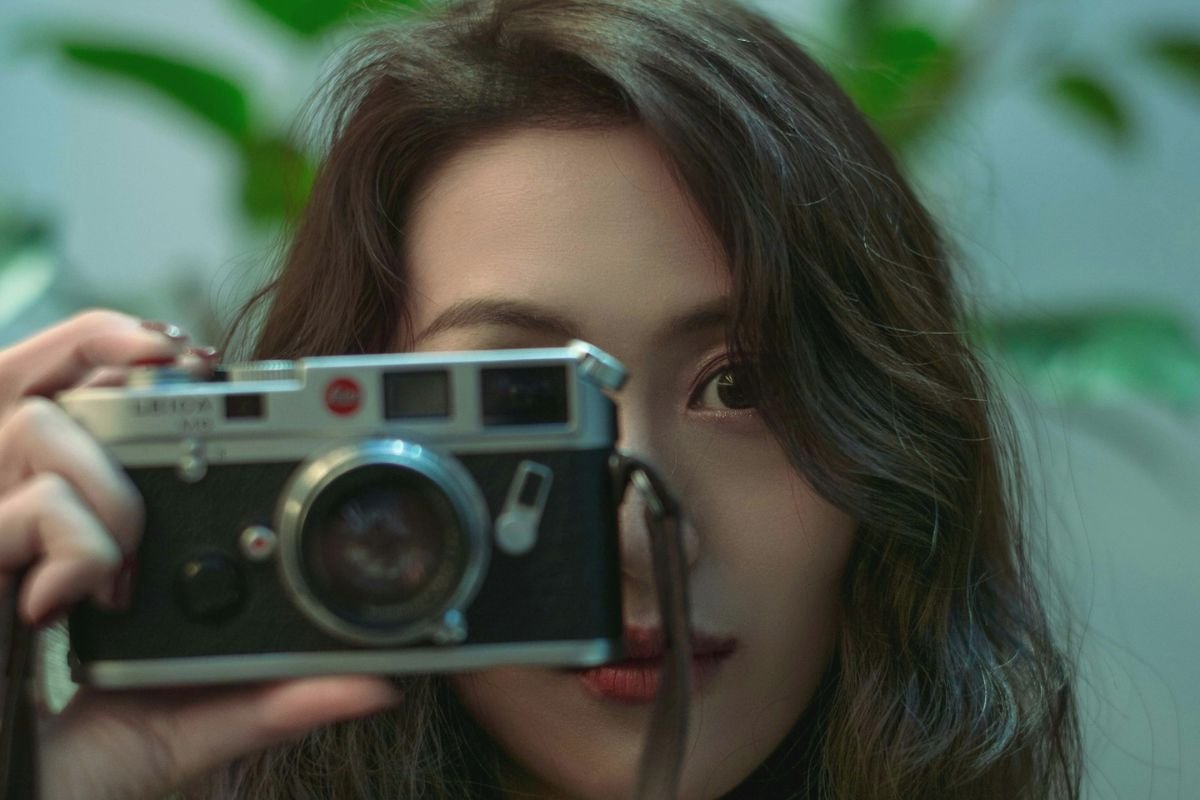
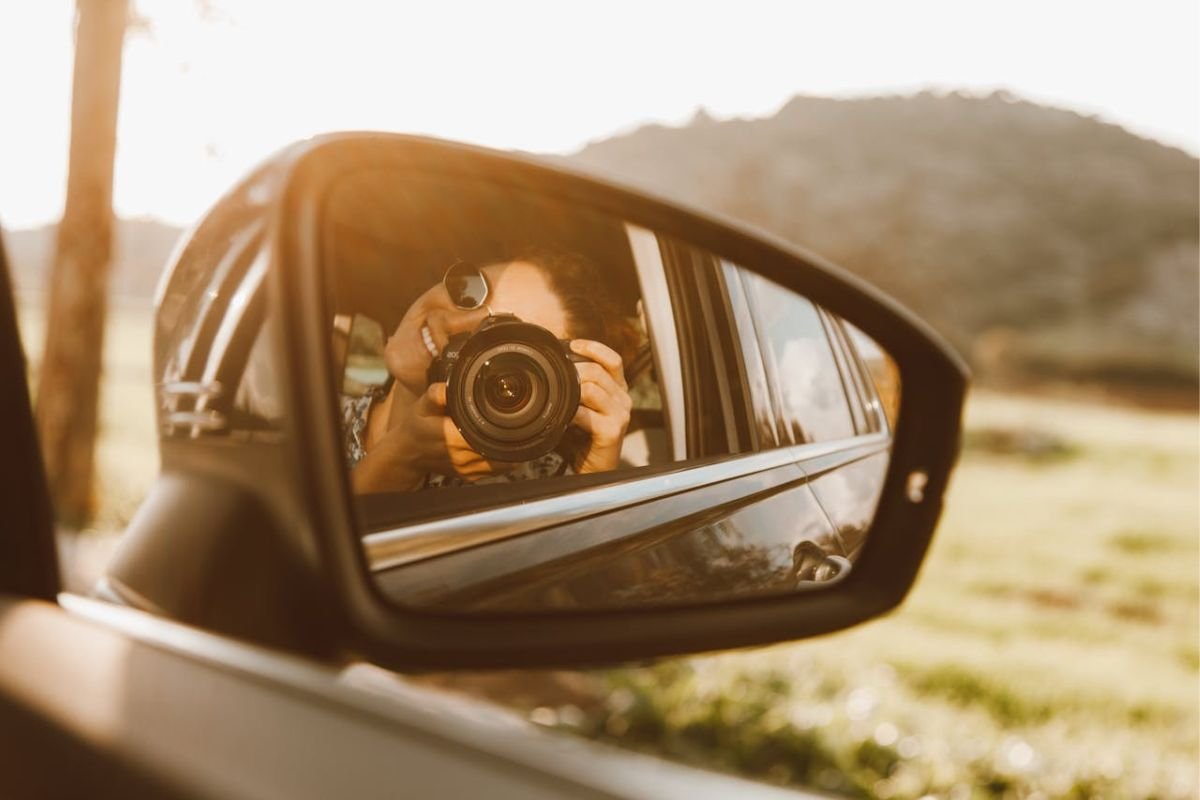
One of the biggest differences between mirrors and cameras lies in how they shape what you see. A mirror reflects light straight back to you, keeping your proportions intact. A camera, however, bends light through layers of glass before sending it to the sensor. That bending introduces distortion, sometimes subtle and sometimes dramatic.
Wide-angle lenses, such as a 24 mm, tend to exaggerate whatever is closest to them. This is why taking a selfie at arm’s length can make your nose look larger, your forehead rounder, and your features slightly stretched. On the other end of the spectrum, telephoto lenses like 200 mm or 300 mm compress everything, making faces appear flatter and broader. Neither look resembles how we see people in everyday life.
Even phone cameras, which rely on wide-angle lenses by default, can make your face look unusual simply because they are too close. Step back a metre or two and the distortion settles. Suddenly the portrait looks more like you.
Then there is resolution. Modern cameras can capture astonishing detail, often more than the human eye notices in passing. Skin texture, tiny shadows, pores and faint lines appear far more visible in a high-resolution photo than they ever do in the mirror. Add lighting and angles into the equation, and the camera becomes even more unpredictable. Anyone who has taken portraits knows how gentle lighting can soften a face and how harsh lighting can undo it all in an instant.
So when a friend sighs, “You made me look terrible in that photo,” it may not be vanity or imagination at all. The camera genuinely can be unkind.
Which Version of You Is More Accurate?
So why do you look different in photos compared to mirrors? Much of it comes down to familiarity, movement, lighting, camera distortion, and the psychology of self perception. Mirrors show a version of you your brain has learnt to recognise and feel comfortable with, while photos freeze single moments under conditions that are rarely perfect.
That does not mean photos reveal the “real” you any more than mirrors do. Human presence is far more than a still image. The people around you experience your expressions, movement, warmth, personality, and energy all at once, things no camera can fully capture.
Perhaps that is why appearance feels so different across reflections and photographs. Neither shows the complete picture. A mirror reflects a living, moving person, while a photograph captures only a fraction of a second.
And maybe the version of you that matters most is the one people experience in real life rather than the one trapped inside a single frame.
Related Reflections
If this sparked your curiosity, you might find these perspectives helpful:
- How subtle psychological triggers shape everyday decisions → (Post 024)
- What your reactions in conversations reveal about your inner world → (Post 009)
- Practical ways to better understand people beyond what they say → (Post 034)
- Small behavioural shifts that influence how others perceive you → (Post 048)
People Also Ask
Frequently Asked Questions About Mirrors, Photos, and Self-Perception
Why do I look better in the mirror than in photos?
You’re more familiar with your mirrored reflection because you see it every day. This creates a sense of comfort through repeated exposure. Photos show the unflipped version of your face, which can feel unfamiliar. Cameras also capture a single moment, often mid-expression, which may not reflect how you usually appear in motion
Do cameras distort how you really look?
Yes, cameras can distort your appearance depending on lens type, distance, and lighting. Wide-angle lenses, especially on phones, can exaggerate facial features when held too close. Lighting and angles also play a major role in how your face is captured.
Which is more accurate, a mirror or a photo?
Neither is perfectly accurate. A mirror shows a reversed version of your face in motion, while a photo captures a single, unflipped moment influenced by technical factors. In real life, people see you in movement, expressions, and changing light, which is closer to how you appear in a mirror than in a still image.
Why do I look worse in selfies?
Selfies are often taken at close range using wide-angle lenses, which can distort proportions. This can make certain features appear larger or less balanced. Holding the camera further away or using a different lens can produce a more natural result.
Why do I look different in every photo?
Small changes in angle, lighting, timing, and expression can significantly alter how you appear in a photo. Because a camera captures just one instant, even a slight shift in posture or facial expression can create a very different image each time.
Is the way I see myself in the mirror how others see me?
Not exactly. Others see a non-reversed version of your face, along with your expressions, voice, and movement. They experience you as a whole person rather than focusing on a single static image, which often makes appearance differences less noticeable to them.
Why do I notice flaws in photos more than in real life?
A still image directs all your attention to visual details, making small imperfections stand out more. In real life, attention is spread across movement, conversation, and emotion, so those details become far less significant.