Growing Old Together: Who Finds It Harder to Live Without the Other?
07 JULY 2026
I have always liked a line from an old poem:
“Bound together as husband and wife, loving each other without doubt.”
When we are young, marriage often feels simple.
Two people fall in love, make promises, and imagine a future stretching endlessly before them. Few newlyweds spend much time wondering what life will look like forty or fifty years later. They simply assume they will be growing old together, sharing life’s joys, disappointments, and unexpected turns side by side.
But time has a way of reshaping even the strongest relationships.
The excitement of youth gradually gives way to routines, responsibilities, and countless ordinary days. The passion that once felt all-consuming may soften into something steadier. What remains is often a companionship built through years of shared experiences, private jokes, disagreements, sacrifices, and small acts of care.
Some couples become even closer with age. Others discover that decades of living together have brought challenges they never expected.
Which raises an interesting question:
When one spouse is no longer there, who finds it harder to carry on alone?
Several people who have lived through these later chapters of marriage shared their honest thoughts. Their answers reveal something many families recognise but rarely discuss.
The First Perspective: “I Can’t Live Without My Wife” and the Reality of Marriage in Old Age
The Invisible Work That Holds a Home Together
“Without her, the house loses its warmth.”
For many couples of older generations, family life followed a familiar pattern. The husband worked outside the home, while the wife managed much of what happened within it. Meals appeared on the table. Appointments were remembered. Family gatherings were organised. Daily life moved forward almost effortlessly.
At least, that’s how it seemed.
What often went unnoticed was how much of that stability depended on one person’s constant care and attention. In many marriages, it can take years before a husband fully recognises how much his wife contributes to the family’s wellbeing. Only later do some men fully appreciate the value of treating their wives with the care, respect, and gratitude they deserve.
The Week Everything Fell Apart
A friend of mine is a perfect example.
Whenever his wife travels abroad to visit relatives, she prepares for days before leaving. She fills the refrigerator with meals, labels containers, and leaves detailed instructions. Only when everything is arranged does she feel comfortable boarding her flight.
Even then, things rarely go according to plan.
On one occasion, he forgot to turn off the cooker and nearly caused a fire. Within a few days, laundry was piled on chairs, dishes crowded the sink, and the kitchen no longer resembled the orderly space his wife had left behind.
He laughs about it now.
But behind the laughter is an honest admission.
“I really don’t know what I’d do without her.”
More Than Cooking and Cleaning
What he misses isn’t simply the practical help.
It’s the feeling she creates.
The sense that someone is thinking ahead. The comfort of hearing another person moving around the house. The certainty that life is running as it should.
Without her, the rooms feel different.
Not empty exactly, but incomplete.
His experience is far from unique. Research has often shown that older men, particularly those from traditional households, can struggle deeply after losing a spouse. Many have relied on their wives not only for practical support, but also for emotional connection, social ties, companionship, and a sense of stability.
As the years pass, dependence can grow in ways neither partner fully notices.
A husband may spend decades believing he is independent, only to discover how much of his daily life is intertwined with the woman beside him.
Most never say it aloud.
Perhaps because some feelings become harder to express with age.
Or perhaps because the deepest forms of love rarely announce themselves.
They appear in packed lunches, remembered appointments, folded laundry, familiar conversations, and the countless little routines that shape a shared life.
Only when those routines disappear do many people realise how much they meant. For many older adults, the prospect of facing daily life alone reveals one of the most difficult realities of ageing: the fear of growing old can sometimes feel even more unsettling than the thought of death itself, especially when companionship has been central to life for decades.
The Second Perspective: Long-Term Marriage Is About Choice

Marriage Is Often Tested in Ordinary Ways
It is easy to imagine that relationships are defined by dramatic moments.
The great crisis. The devastating diagnosis. The life-changing event that forces people to reveal who they really are.
Yet most long-term marriages are not shaped by a single dramatic turning point.
They are shaped by years of ordinary challenges.
Many people have heard the old saying:
“Husband and wife are like birds in the same forest; when disaster strikes, they fly their separate ways.”
It is a cynical view of love, one that suggests people will ultimately choose themselves when life becomes difficult.
And certainly, some relationships do fall apart under pressure.
But many others endure.
Their strength comes from facing hardship side by side and refusing to let life’s challenges drive a wedge between them.
Long before any major crisis arrives, couples are already being tested. They navigate financial struggles, disagreements with relatives, sleepless nights raising children, health concerns, disappointments, and unexpected setbacks.
These moments may not make headlines, but they often reveal the true strength of a relationship.
The Choice She Made
A friend once shared a story that stayed with me.
One of his colleagues was diagnosed with cancer.
After hearing the news, he found himself trapped between two painful choices. Should he tell his wife everything and allow her to share the burden? Or should he keep some of the truth from her, hoping to protect her from worry?
The more he thought about it, the more conflicted he became.
One night, he dreamed of the day they first met.
In the dream, she was exactly as she had been years earlier. Young, hopeful, full of plans for the future.
When he woke up, a troubling thought settled in his mind.
She still had so much life ahead of her.
What if his illness became a weight she should not have to carry?
What if loving her meant letting her go?
But reality had other plans.
When his wife learned the truth, she did not step away.
She stepped closer.
She sat beside him through hospital visits, treatment sessions, difficult conversations, moments of fear, and days filled with uncertainty. What he imagined might become a lonely battle became something they faced together.
Fortunately, the treatment was successful.
He recovered.
But perhaps the greater lesson was not about survival.
It was about devotion.
Beyond Dependence
Stories like this remind us that people do not always act from fear or self-interest when life becomes difficult.
Sometimes they act from love.
That is why I do not think marriage is simply about who cannot live without whom.
Most people are stronger than they realise. If circumstances force them to continue alone, many eventually find a way to adapt and carry on. Human beings have an extraordinary ability to endure.
Yet knowing you can survive alone is very different from wanting to.
After years of sharing life’s joys, disappointments, victories, and losses, many couples reach an understanding that cannot easily be explained.
They know they would survive without each other.
They simply do not want to.
There is something deeply moving about that distinction.
The strongest relationships may not be built on dependence at all. They are built on a conscious choice that is renewed again and again over the years.
A choice to stay.
A choice to care.
A choice to keep walking beside the same person, even when the road becomes difficult.
Perhaps that is one of the most enduring forms of love a marriage can offer.
The Third Perspective: Growing Old Together Changes Everything
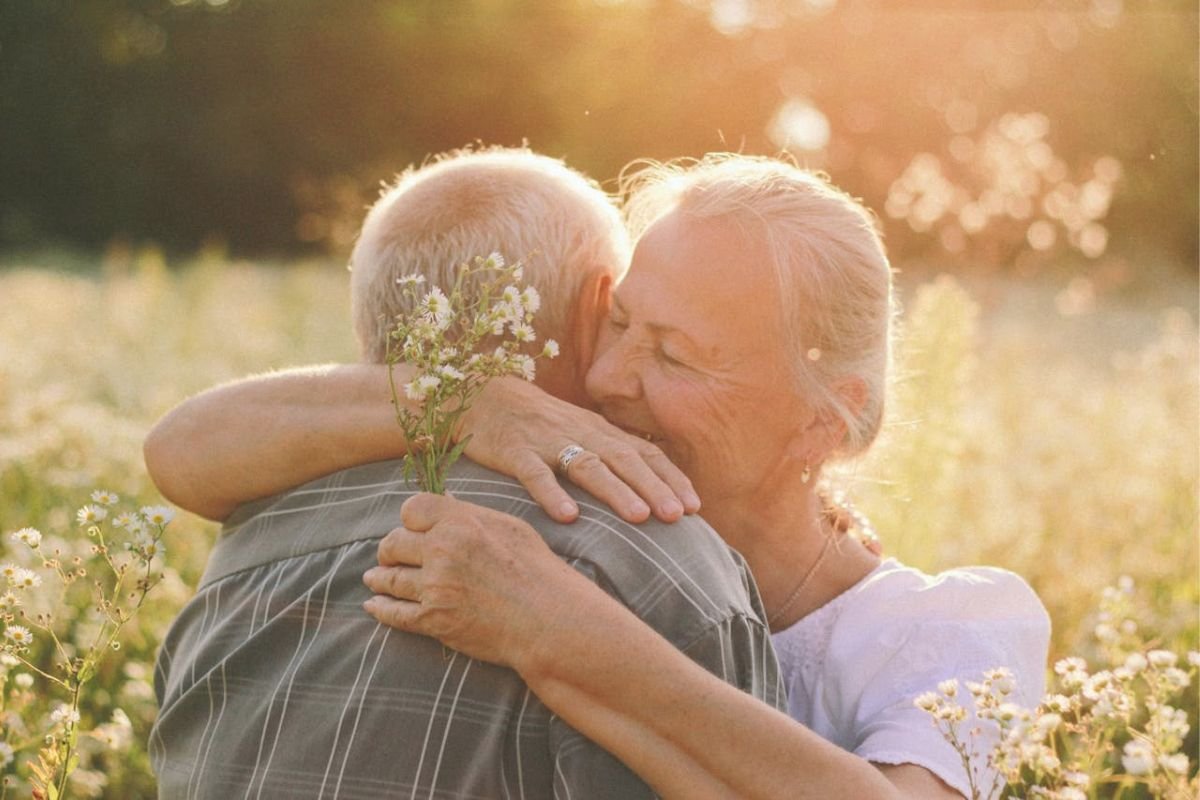
When Two Lives Become One Story
Many people believe the happiest marriages strike a balance between closeness and independence.
Two people remain themselves, yet they build a shared life together. They encourage each other’s growth, carry one another through difficult seasons, and learn how to move through life as partners rather than opponents.
For many couples who successfully grow old together, this is exactly what happens.
Not all at once.
But slowly.
Almost imperceptibly.
The Years That Shape a Marriage
Strong marriages are rarely built through grand romantic gestures alone.
Two strangers meet.
Friendship becomes love.
Love becomes commitment.
Then come the years that truly shape a relationship.
The mortgages. The sleepless nights. The career worries. The family gatherings. The illnesses. The celebrations. The disappointments no one else sees.
Day after day, year after year, two separate lives begin to merge. Looking back, couples are often surprised by how quickly the years pass, turning what once felt like distant dreams into treasured memories. Until one day, they realise their history is no longer his story or her story.
It is their story.
The Familiar Face Beside You
I have known many older married couples who still argue about the smallest things.
One complains that the television is too loud.
The other insists that the tea tastes better prepared a certain way.
They repeat the same disagreements they have probably had for decades.
Yet something remarkable often happens when life presents a genuine challenge.
The first person they want to tell is still each other.
The first person they want beside them during difficult moments is still each other.
Because after decades of sharing life’s joys, disappointments, routines, and memories, their presence brings a sense of comfort that no one else can quite replace.
More Than Love: The Power of Lifelong Companionship
There is an old saying that the spouse you marry in youth becomes your companion in old age.
The older I get, the more wisdom I see in those words.
By the later chapters of marriage, many couples have stopped keeping score.
They know which battles matter and which do not.
They have seen each other at their best and their worst.
They know the fears that are never spoken aloud, the hopes that remain, and the habits that will probably never change.
This kind of emotional intimacy cannot be rushed. It develops through decades of trust, forgiveness, patience, and shared experience.
Each challenge leaves its mark.
Every shared experience adds another thread to the bond between them.
Eventually, those threads become so numerous that separating them feels almost impossible.
So Who Needs Whom More?
When a couple reaches old age, who finds it harder to live without the other?
The truth is that there is no universal answer.
Some husbands find the adjustment more difficult.
Some wives do too.
Much depends on personality, health, family support, and the nature of the marriage itself.
Yet after observing many couples who have spent a lifetime together, I find myself returning to a different thought.
Perhaps the question itself misses the point.
In the strongest marriages, it becomes difficult to measure who needs whom more because their lives have become deeply intertwined through decades of shared memories, routines, sacrifices, and affection.
It is not that one person cannot survive without the other.
It is that life itself no longer feels quite the same when the person who shared your journey is no longer there.
For those who eventually face that difficult reality, learning to live after losing a husband or wife is not about forgetting the love they shared. It is about gradually rediscovering purpose, hope, and meaning while carrying that love forward into a new chapter of life.
What Remains After All the Years

The article began with a line from an old poem:
“Bound together as husband and wife, loving each other without doubt.”
When we are young, those words often sound like a promise.
When we are older, they begin to sound like something else.
A record of everything that has been shared.
The ordinary mornings.
The difficult seasons.
The mistakes forgiven.
The burdens carried together.
The laughter that survived long after youthful romance changed into something steadier and deeper.
Perhaps that is the real answer to the question.
There is no simple way to measure who cannot live without whom.
Some relationships are built on dependence.
Others are built on devotion.
The strongest seem to become something more.
Two people who have spent so much of their lives walking side by side that each has become part of the other’s understanding of home.
That is the beauty of lifelong companionship.
Not perfection.
Not a life free from hardship.
But a lasting commitment built through thousands of ordinary days.
And maybe that is what many of us hope for when we marry.
To spend our lives growing old together with someone who remains beside us through the passing years, until the shared memories become greater than either life alone.
Further Reflections
If this article resonated with you, you may also enjoy:
- Finding hope and purpose after saying goodbye to a lifelong partner → (Post 099)
- Exploring why many people fear the realities of ageing more than death itself → (Post 051)
- The importance of appreciating a devoted spouse before the years slip by → (Post 052)
- Reflections on how quickly life passes and the memories we collect along the way → (Post 066)
- The relationships that leave the deepest mark on who we become → (Post 019)
People Also Ask
Frequently Asked Questions About Growing Old Together
Why do some spouses struggle more after losing their partner?
The experience varies from person to person. Factors such as emotional attachment, daily routines, health, social support, and the nature of the marriage all play a role. For many couples, decades of shared experiences create a deep bond that can make life feel very different when a spouse is no longer there.
What makes a long-term marriage successful?
Successful long-term marriages are often built on trust, patience, communication, mutual respect, and a willingness to support one another through life’s challenges. Small everyday acts of care can be just as important as major expressions of love.
Does growing old together make couples more dependent on each other?
In some cases, yes. However, many couples develop something deeper than dependence. Over time, their lives become closely connected through shared memories, routines, responsibilities, and companionship, creating a strong sense of partnership.
Why is companionship important in old age?
Companionship provides emotional support, comfort, and a sense of connection. For many older couples, having someone who understands their history, experiences, and daily life contributes greatly to their overall well-being and happiness.
What is the difference between love and lifelong companionship?
Romantic love often changes over the years, while lifelong companionship grows through shared experiences, trust, and commitment. Many couples find that as they age, companionship becomes one of the most meaningful aspects of their relationship.