Parenting Teenagers: The Dangerous Misunderstanding Behind “Letting Them Grow Naturally”

16 JUNE 2026
“Just let things take their natural course.”
It sounds calm. Wise, even.
Many exhausted parents say it to comfort themselves during the hardest years of parenting teenagers. Especially during adolescence, when conversations become arguments, affection turns into distance, and every day can feel emotionally draining.
A writer once compared raising a teenager to walking beside a tiger. You move carefully, never fully certain what might trigger another emotional storm.
There is truth in that image.
By the time many parents reach middle age, their children are entering a stage filled with resistance, emotional swings, and growing independence. In the middle of all this, parents often find themselves overwhelmed. There are arguments that leave everyone hurt. There are moments of helplessness, frustration, and emotional exhaustion.
And when all those feelings pile up at once, it becomes tempting to step back and say:
“Maybe I should just let things happen naturally.”
But the meaning behind that phrase matters more than most people realise.
Because “letting things take their natural course” can either mean trusting a child while continuing to guide them, or emotionally withdrawing and giving up altogether. Those two paths may sound similar, but they lead to completely different outcomes.
1. Letting Go Is Not the Same as Giving Up
Many years ago, parenting looked very different.
For a lot of families in the 1950s and 1960s, survival came first. Parents focused mainly on putting food on the table, keeping a roof overhead, and getting through difficult circumstances. Emotional guidance was often limited, with many parents doing the best they could under difficult circumstances.
Today, childhood exists in a completely different environment.
Children are growing up surrounded by social media, endless comparison, academic pressure, and emotional struggles that previous generations did not experience in the same way. Modern parenting asks for more than material support. Children also need emotional presence, stability, and guidance.
Time alone does not raise a child.
Children do not automatically become emotionally healthy, resilient, or responsible simply because they grow older. Research into child development continues to show how deeply children are shaped by connection, consistency, encouragement, and emotional security at home.
Of course, no parent can control every outcome. Every child has their own personality, temperament, and path in life.
But there is still a difference between allowing a child space to grow and leaving them emotionally alone.
When Families Feel Emotionally Disconnected
Some children grow up with everything they physically need, yet still carry a deep sense of loneliness.
This sometimes happens in families separated by work or migration, where parents and children spend years apart. But it can also happen inside ordinary homes.
Parents and children may sit at the same dinner table every evening while barely knowing each other emotionally. Over time, emotional distance inside families can shape the way children see themselves, relationships, and the world around them.
One is busy surviving.
The other is silently struggling alone.
Over time, they become familiar strangers living under the same roof.
Many tired parents defend this distance by saying:
“Our parents did not pay much attention to us either, and we still turned out fine.”
And perhaps some did.
But society has changed. Childhood has changed. Emotional pressure has changed too.
What children face today often requires more involvement, more listening, and more emotional steadiness from parents than ever before. Parenting in the digital age brings challenges previous generations never had to navigate, from online comparison to constant distraction and rising mental health struggles among young people.
Children need emotionally available parents now more than ever.
Children Learn Emotional Resilience From Their Parents

There is also a common misunderstanding that successful children are shaped only through strict discipline or natural talent.
But most children do not grow through pressure alone.
They grow through support.
Through parents who notice what excites them. Parents who encourage their strengths instead of only correcting weaknesses. Parents who remain present during failure instead of appearing only when achievements arrive.
Children pay far more attention to what parents consistently do than to what they repeatedly say.
A parent who handles stress with patience teaches patience.
A parent who treats others with kindness teaches kindness.
A parent who takes responsibility teaches responsibility.
In many ways, children absorb the emotional world created around them. A parent’s mindset, emotional reactions, and way of facing life often shape a child far more deeply than many realise.
So if you hope your child becomes compassionate, emotionally steady, disciplined, or resilient, those qualities must first appear inside your own behaviour.
Guidance Requires Presence
Real guidance is rarely dramatic.
Most of the time, it looks ordinary.
It is listening even when you are tired.
Remaining patient during difficult seasons.
Paying attention to small emotional changes.
Encouraging without controlling.
Correcting without humiliating.
Staying emotionally available even when parenting feels exhausting.
And remembering that children often carry small emotional memories from childhood far longer than parents expect.
What appears effortless from the outside is often built on years of steady involvement and emotional patience behind closed doors.
Children do not need perfect parents.
But they do need parents who remain present.
Because true guidance does not mean controlling every step a child takes.
But it also does not mean leaving them to face life entirely on their own.
2. Letting Things Take Their Natural Course Does Not Mean Leaving Children to Survive Alone
When I think back to childhood, I rarely remember my parents walking me to school.
Aside from the early years of primary school, when my mother and father accompanied me on the first day of term, I eventually began making the journey with friends like most children did back then.
Parents from that generation often repeated the same simple warning:
“Study hard, or life will become much harder later on.”
At the time, those words did not feel especially emotional. They were practical. Direct. Almost routine.
But looking back now, I realise those words carried the weight of everything our parents had already lived through themselves.
Childhood Used to Carry Responsibility Early
After school each day, there were chores waiting at home. Responsibilities arrived early. So did pressure.
Many children grew up watching their parents work long hours, carry financial burdens, and sacrifice constantly just to keep the household running. In families struggling to make ends meet, education was often seen as one of the few realistic ways to build a different future.
So even when parents casually said things like, “Just let studying take its natural course,” life itself was teaching a much harsher lesson.
Children could see exhaustion written across their parents’ faces.
They could feel the strain inside the household.
Without anyone needing to explain it directly, many understood that limited opportunities often led to difficult lives.
That reality became its own form of motivation.
Strict Parenting Often Came From Fear
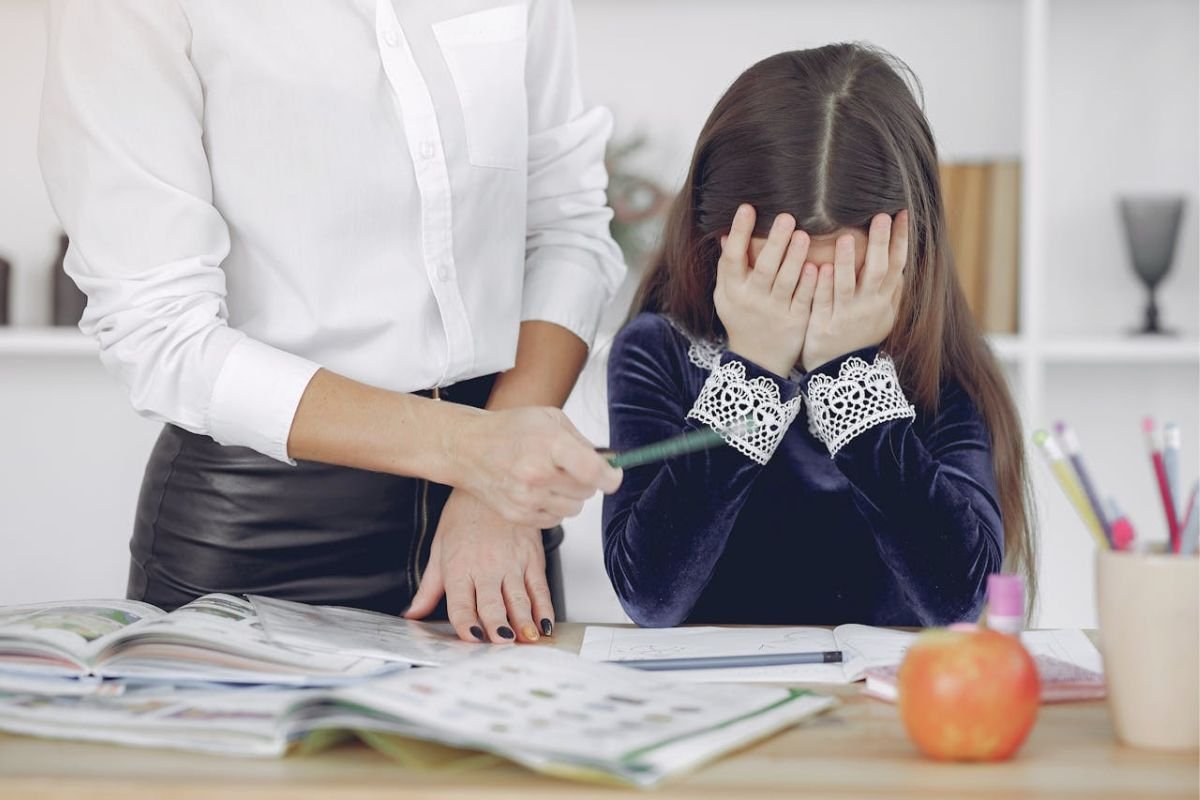
Because of this, many children from earlier generations accepted strict parenting with less resistance than we often see today.
Of course, that does not mean harsh parenting was healthy.
Modern research has shown clearly that fear-based discipline, emotional distance, and constant criticism can leave lasting emotional wounds that follow children well into adulthood.
But many parents from those generations were parenting through survival, fear, and pressure themselves. Their strictness often came from anxiety about their children repeating the same hardships they had endured.
And many children, even while feeling hurt by that strictness, still interpreted it as love.
Not always healthy love.
But love shaped by sacrifice, exhaustion, and survival.
Modern Parenting Looks Different Today
The world children grow up in now feels completely different.
Today, young people are surrounded by endless alternatives, distractions, and new ideas about success. Through social media, they see influencers, entertainers, athletes, and entrepreneurs building careers outside traditional education.
As a result, many children no longer feel the same urgency around studying that previous generations experienced so intensely.
And in some ways, that shift makes sense.
Success today no longer follows one single path.
But education still matters deeply.
While a degree alone cannot guarantee success, education continues to open doors, expand opportunities, and provide stability that many people would otherwise struggle to reach. Without it, certain opportunities may disappear before a child even has the chance to pursue them.
Children Still Need Emotional Parenting And Guidance
One reason people often discuss Barack Obama and Michelle Obama as parents is because, despite their demanding careers and public responsibilities, they still tried to remain actively involved in family life.
Like many working families, they relied on support from extended family. Michelle Obama’s mother, Marian Robinson, helped care for their daughters while the couple balanced work and parenting.
At home, they maintained routines, limited television time, encouraged responsibility, and expected their daughters to contribute to household life in age-appropriate ways.
What stands out most is not perfection, but presence.
Barack Obama often spoke warmly about wanting to raise daughters who understood empathy, responsibility, gratitude, and discipline.
And when their eldest daughter Malia eventually left for new stages of life, both parents openly admitted how emotional it felt watching her grow independent.
That feeling is familiar to almost every parent.
The pride.
The sadness.
The strange ache of realising your child no longer needs you in the same way they once did.
Children Need To Feel Someone Is Walking Beside Them
In the end, strong parenting is rarely about control.
It is about presence.
Children need more than food on the table, money for school, or rules shouted from across the room. They need to feel that someone is emotionally walking beside them as they grow.
Someone who notices when they are struggling.
Someone who corrects them when necessary.
Someone who encourages them when they begin doubting themselves.
And someone who stays involved long enough for children to feel supported rather than abandoned to figure life out entirely on their own.
3. Letting Things Take Their Natural Course Does Not Mean Doing Everything for Your Child

When children become difficult, emotionally withdrawn, rebellious, or overwhelmed, many parents slowly drift toward one of two extremes.
Some grow exhausted and eventually stop trying to guide their child altogether.
Others move in the opposite direction. They begin fixing, rescuing, and managing every problem on their child’s behalf.
At first, this usually comes from love.
No parent wants to watch their child suffer. They want to protect them from pain, disappointment, failure, rejection, or consequences that feel too heavy to carry.
But love can sometimes cross into overprotection so gradually that neither parent nor child notices it happening.
And over time, constant rescuing can prevent children from developing responsibility, resilience, and emotional maturity.
When Protection Slowly Turns Into Dependence
I once watched a television interview that captured this tragedy painfully well.
A man in his thirties had graduated with a master’s degree from a respected university. After entering the workforce, he developed a serious online gambling addiction that slowly consumed his life.
He lost his job.
Then the debts came.
Huge debts that continued growing faster than he could control.
His parents became desperate to save him.
They encouraged him gently. Reasoned with him repeatedly. Worked extra jobs to help repay what he owed. Everything they did came from the hope that their son would eventually regain stability and rebuild his future.
But something heartbreaking slowly unfolded inside the family.
The more completely his parents protected him from consequences, the less responsibility he seemed willing to take for himself.
His dependence deepened.
The addiction tightened its grip.
And the entire household became trapped inside the same cycle together.
Eventually, the father became emotionally drained and wanted to stop enabling the behaviour altogether. But the mother still held onto hope that one final sacrifice might rescue her son completely.
She even considered selling the family home to clear his debts.
The strain became so severe that it damaged the parents’ own relationship.
Meanwhile, the son remained emotionally stuck, continuing to rely heavily on his mother while avoiding responsibility for rebuilding his own life.
Children Cannot Learn Responsibility If Parents Carry Everything
Of course, addiction is deeply complex.
It cannot simply be blamed on parenting alone. Mental health struggles, stress, emotional vulnerability, environment, trauma, and access to addictive behaviours all influence situations like these.
But family patterns can sometimes unintentionally worsen the problem.
When children are repeatedly shielded from consequences, they may never fully experience the pressure that teaches accountability, self-control, and personal responsibility.
One painful lesson appears again and again in stories like this:
Children who are protected from every hardship often struggle most when life finally asks them to stand on their own.
Some parents focus so heavily on academic success that they unintentionally overlook other equally important life skills.
How to handle disappointment.
How to regulate emotions.
How to solve problems independently.
How to recover after failure.
How to carry responsibility without collapsing beneath it.
When parents constantly absorb every burden, clear every obstacle, and solve every crisis, children can slowly begin believing that someone else will always step in to rescue them.
Healthy Parenting Helps Children Grow Stronger
None of this means parents should become cold or emotionally distant.
Children still need compassion.
They still need guidance, reassurance, and support during failure.
But healthy support helps children grow stronger over time instead of becoming permanently dependent on being rescued.
That balance is difficult.
Especially during adolescence, when emotions become intense, tempers rise quickly, and children begin testing limits while searching for their own identity.
Parents do not need to control every decision perfectly.
But they also cannot hide behind the phrase “let things take their natural course” as a way of avoiding difficult conversations, boundaries, or emotional involvement.
Children need freedom.
But they also need structure.
They need patience, accountability, emotional steadiness, and parents willing to remain engaged even when parenting becomes emotionally exhausting.
Walking Beside Them Without Carrying Them

Perhaps that is the hardest part of parenting.
Learning how to walk beside children without trying to completely control them.
Learning how to support them without carrying their entire life for them.
And learning how to slowly loosen your grip while still remaining emotionally present, because the way parents speak to their children continues shaping the relationship long after childhood ends.
At the beginning of this article, adolescence was compared to walking beside a tiger.
Maybe that image stays with parents because raising children often feels exactly like that.
There are seasons filled with fear, uncertainty, emotional distance, and moments where you wonder whether anything you are doing is working at all.
But parenting teenagers has never been about becoming perfect.
What children need most are emotionally present parents who remain involved long enough to guide them through those difficult years with patience, consistency, love, and courage.
Not controlling every step.
Not abandoning them to struggle alone.
But walking beside them steadily until they are finally ready to walk on their own.
Further Parenting Reflections
People Also Ask
Frequently Asked Questions About Parenting Teenagers
Is it healthy to let teenagers make their own decisions?
Yes, teenagers need opportunities to make age-appropriate decisions because independence is an important part of emotional growth. However, healthy parenting still requires guidance, emotional support, and reasonable structure. Teenagers benefit most when parents remain involved without trying to control every choice.
What is the difference between healthy parenting and overprotective parenting?
Healthy parenting helps children gradually become independent while still feeling emotionally supported. Overprotective parenting often involves constantly rescuing children from consequences, solving every problem for them, or controlling too much of their life. Over time, this can make it harder for children to develop emotional resilience, responsibility, and confidence.
Why is emotional presence important when parenting teenagers?
Teenagers may appear distant during adolescence, but they still need emotionally available parents. Emotional presence helps children feel supported, understood, and secure during periods of emotional change, stress, and identity development. Small moments of listening, encouragement, and consistency often matter more than parents realise.
Can being too strict affect a child emotionally?
Yes. Research has shown that excessive harshness, fear-based discipline, and constant criticism can negatively affect a child’s emotional wellbeing and self-esteem. While children still need accountability and structure, healthy parenting balances discipline with emotional warmth, communication, and support.
How can parents guide teenagers without controlling them?
Parents can guide teenagers by setting healthy expectations, remaining emotionally involved, listening without constant judgement, and allowing children to experience reasonable consequences for their choices. Parenting teenagers is often about walking beside them rather than trying to control every step they take.
What are signs of emotional disconnection between parents and children?
Emotional disconnection can appear when parents and children rarely communicate meaningfully, avoid sharing feelings, or begin feeling like strangers despite living together. Children may become withdrawn, stop seeking support, or feel emotionally alone even inside the family home.
Why do some teenagers become rebellious during adolescence?
Adolescence is a natural stage of emotional and psychological development. Teenagers begin forming their own identity, independence, beliefs, and social relationships during this period. Emotional volatility, testing limits, and questioning authority are common parts of growing up, although strong parental guidance and emotional support can help teenagers navigate this stage more safely.
How do parents help children develop emotional resilience?
Children develop emotional resilience when parents allow them to face manageable challenges while still offering encouragement and support. Protecting children from every hardship can sometimes prevent them from learning coping skills, responsibility, problem-solving, and emotional regulation.