The Wheat Story: From Superfood to Scapegoat?
09 SEPTEMBER 2025
Let’s Talk About Wheat: The Grain That Took Over the World
Today, let’s talk about wheat.
Not just because you had toast for breakfast or grabbed a sandwich for lunch, but because wheat is one of the most important foods on Earth.
A Giant in Global Agriculture
Wheat is the most widely grown grain crop by land area, covering over 200 million hectares across the globe. In terms of total production, wheat ranks second, just behind corn. Each year, the world produces 780 to 800 million metric tons of wheat, while corn leads with over 1.2 billion tons.
But those numbers don’t tell the whole story.
People Eat Wheat – Not Just Animals
As mentioned in a previous article, while corn might win in volume, a huge portion of it isn’t consumed by people. It’s used for animal feed, industrial products, and biofuels like ethanol.
Wheat is different. Most of it goes straight to human plates. In fact, wheat provides about 20% of the world’s dietary energy intake, making it an essential part of global nutrition.
Wheat Is Everywhere
What’s even more fascinating is how far wheat has spread. Even in countries that don’t grow much of it, wheat still finds its way into everyday meals. Think about it: even if someone’s never eaten cake, they’ve likely had bread. If not bread, then noodles, pasta, pizza, crackers, or something coated in wheat flour.
That means in many places, wheat has to be imported just to keep up with demand.
The Global Leader in Grain Trade
Wheat isn’t just a food, it’s a global commodity. About one-quarter of all wheat produced, roughly 200 million tons, is traded internationally each year. That’s more than any other grain, including corn and rice. It shows how vital wheat is not only to diets, but also to economies and food security.
From Wild Grass to Global Staple
Here’s where the story gets truly amazing: wheat started out as a wild grass in a tiny part of the Fertile Crescent, mainly in what’s now southeastern Turkey and parts of the Middle East.
Over thousands of years, humans domesticated and refined it, turning it from a modest plant into a crop that feeds billions. The genetic journey wheat has taken is nothing short of astonishing.
The Gluten Debate: Beloved and Blamed
Wheat’s rise to fame is also thanks to gluten, a protein that gives dough its stretchy texture and helps baked goods hold their shape. Without gluten, we wouldn’t have fluffy bread, chewy pizza crusts, or bouncy noodles. That versatility made wheat a cornerstone in countless cuisines.
But gluten also brought controversy. In recent years, wheat has been blamed for everything from digestive issues to chronic diseases. Some even go so far as to call it “an addictive poison,” with wild claims that 70% to 80% of all modern illnesses are caused by wheat.
That’s… a bold claim. And one worth investigating.
What’s Coming Up
So, where did all these theories come from?
How did one of the world’s most reliable food sources become the center of so much debate?
That’s exactly what we’re diving into next, the rise of wheat, the science behind its power, and the truth behind the controversy.
The Wild Roots of Wheat
In a previous article on sweet potatoes, we talked about how their genome is hexaploid, meaning they have six sets of chromosomes. Some readers might wonder: “If a diploid has two sets and a tetraploid has four, wouldn’t a cross between the two result in three sets, not six? How did 2 plus 4 equal 6?”
It’s a fair question, and one that plants answer in their own peculiar way.
Plants Like to Bend the Rules
This kind of thing happens more often than you’d think. In fact, about one-third of all flowering plants are polyploid, that is, they have more than two sets of chromosomes. How? Sometimes, during reproduction, errors in meiosis (the process that usually reduces chromosome numbers in gametes) result in eggs or pollen with extra sets. If these plants survive and thrive, evolution embraces them.
Wheat is a textbook example of this. Modern bread wheat (Triticum aestivum) is a hexaploid, with six sets of chromosomes. Its genome is labelled AABBDD, two sets from each of three ancestral species. But unlike sweet potatoes, whose ancestors were from the same genus, wheat’s story is far messier, involving multiple species and even different genera. It’s a story of ancient wild grasses, accidental hybrids, and millennia of human influence.
Meet the Grass Family
Wheat belongs to the Poaceae family, better known as the grass family. Within that family, it sits in the Triticum genus. Its earliest ancestors branched off from other grasses around 2.5 to 3 million years ago. Around the same time, a related genus appeared: Aegilops, or goatgrasses. These wild grasses would later become a crucial part of wheat’s DNA through natural hybridisation.
Step One: Diploid Beginnings
Hundreds of thousands of years ago, several diploid species began to emerge within the Triticum genus. One of them, Triticum urartu, would eventually contribute the ‘A’ genome to both emmer wheat and modern bread wheat.
Another diploid species, Triticum boeoticum, better known as wild einkorn wheat, was eventually domesticated into Triticum monococcum, or domesticated einkorn. This was the first wheat ever cultivated by humans.
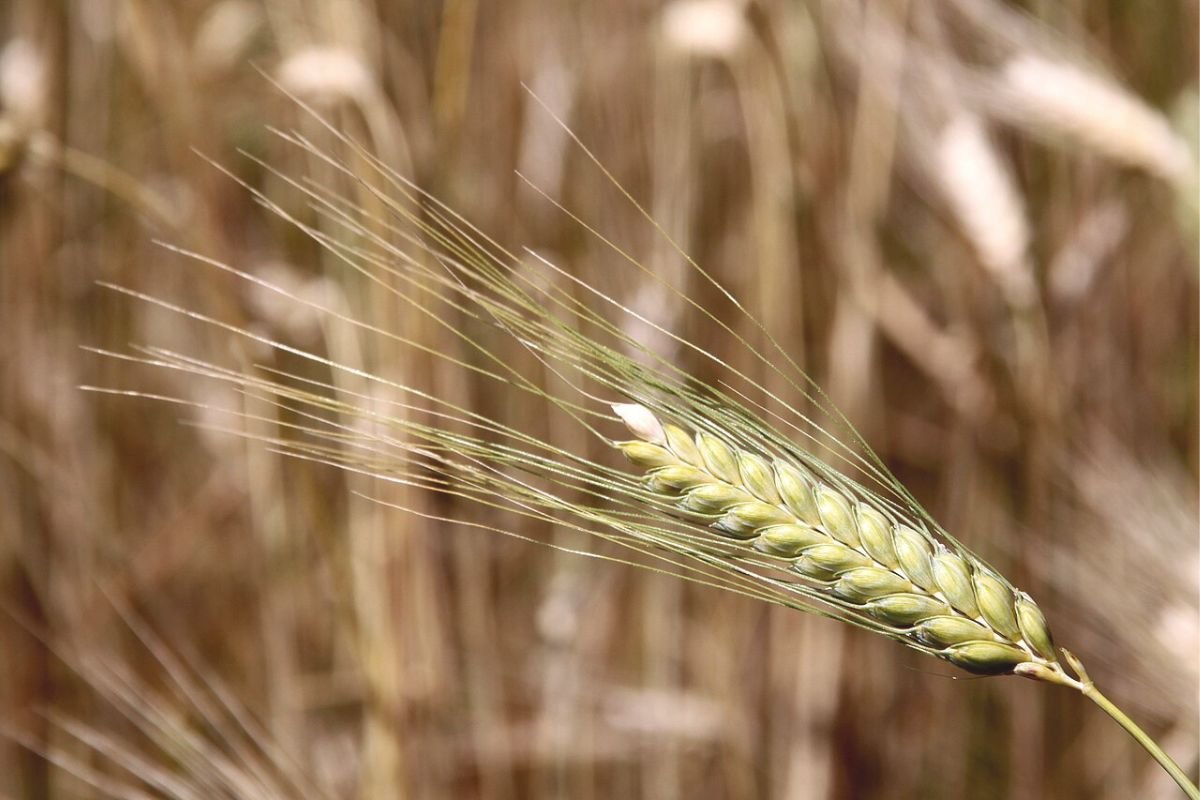
By the way, “einkorn” means “one grain” in German, referring to the fact that each spikelet typically contains just a single grain. (Modern wheats usually have two or more.)
Step Two: A Fortunate Hybrid
Later, T. urartu (carrying the A genome) naturally hybridised with a wild goatgrass called Aegilops speltoides, which contributed the B genome. Their union created a tetraploid wheat with four chromosome sets (AABB), known as wild emmer wheat (Triticum dicoccoides).
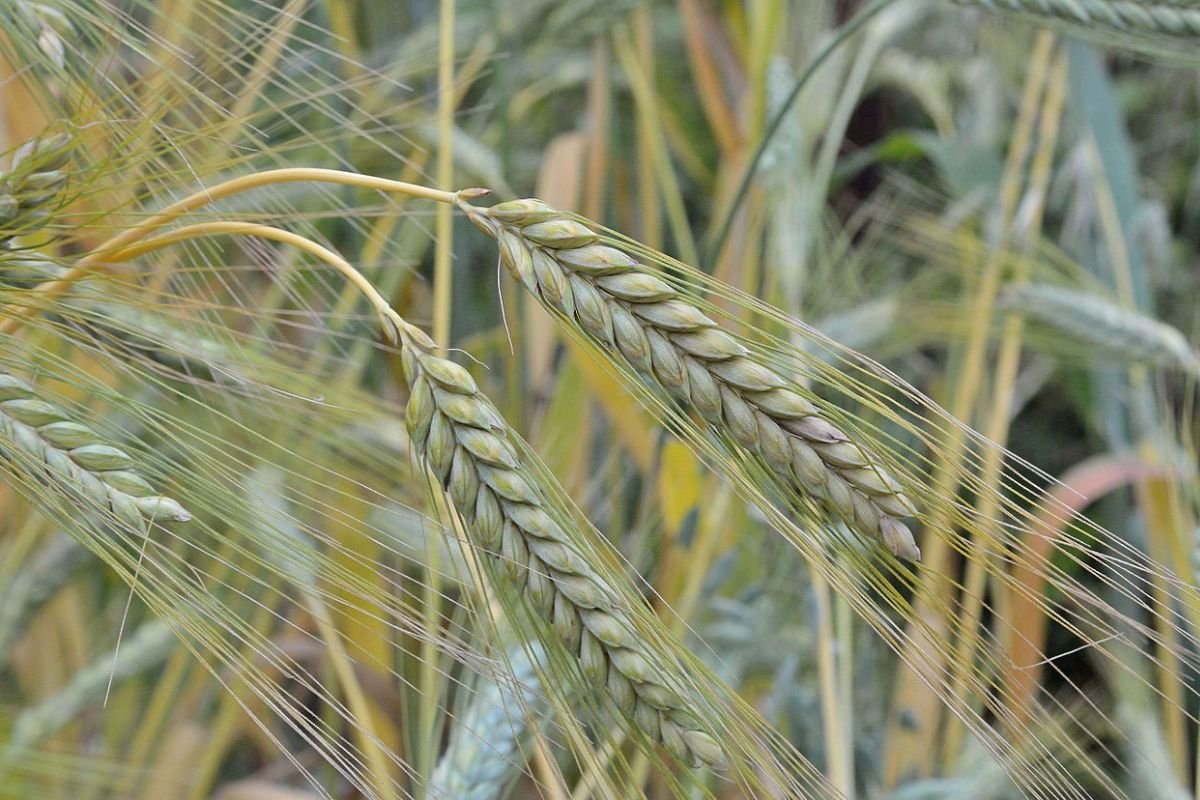
Eventually, early farmers domesticated this wild grain into cultivated emmer wheat, officially called Triticum turgidum ssp. dicoccum. Emmer was hardier and easier to harvest, and it became a staple crop in ancient civilisations.
And just to clear up a common myth: einkorn wheat didn’t evolve into emmer wheat. They’re cousins, not ancestors and descendants. Emmer wheat came from T. urartu, not T. boeoticum. It’s a subtle point, but key to understanding wheat’s family tree.
The Mystery of the “D” Genome
So, by this point in the story, roughly half a million years ago, wild emmer wheat was thriving, carrying an AABB chromosome setup. But today’s modern bread wheat has six chromosome sets: AABBDD.
Where did the D genome come from?
Here’s where things get even more interesting. Just as nature was laying the genetic groundwork, humans were about to play a major role, guiding the next hybridisation that would lead to the wheat we eat today.
The Grain That Built Civilisations
Wheat Before Farming
The first traces of humans eating wheat date back an astonishing 30,000 to 32,000 years ago, long before the invention of agriculture. Back then, people were still hunter-gatherers, foraging for wild wheat wherever it grew. It wasn’t a staple yet, but something about it clearly stuck. Wheat had already made its way into early diets, even in small amounts.
A Cold Turn of Events
Then came a turning point. Around 13,000 years ago, the planet was warming after the last Ice Age, until nature threw a curveball: the Younger Dryas. This sudden return to icy conditions cooled parts of the Northern Hemisphere by more than 5°C in just a few decades. Glaciers began advancing again, and plant life shrank back. Large animals that humans depended on either went extinct or migrated.
For those still relying on hunting and gathering, survival became far more difficult. Food sources grew scarce. Some groups, especially from Europe and Central Asia, migrated southward in search of better conditions.
A Fertile Opportunity
Many of these wandering bands eventually arrived in the Fertile Crescent. A lush, crescent-shaped region in the Middle East, rich in wild grains, legumes, and edible roots. But even here, resources had limits. As more people arrived and stayed, pressure mounted. Scarcity sparked something remarkable: people began to plant what they once foraged.
Wheat was ready.
The First Domesticated Grains
As just mentioned, the first wheat humans domesticated was einkorn, the diploid grain with two sets of chromosomes (AA). Not long after, they also tamed emmer wheat, a sturdier tetraploid carrying four sets of chromosomes (AABB), the result of a natural hybrid between wild grasses. Both grew well in the region’s soils and offered something wild plants could not: consistency and predictability.
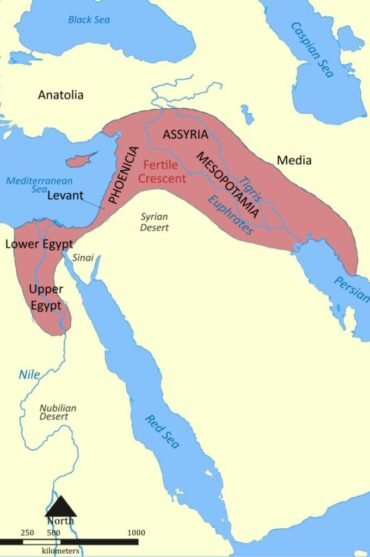
By about 10,000 years ago, as the Neolithic farming revolution gained momentum in the Fertile Crescent, einkorn and emmer became cornerstones of early agriculture.
When Food Becomes Home
Farming changed everything. With a steady supply of food, people no longer had to roam. Small settlements began to appear across Mesopotamia. Families stayed in one place long enough to build homes, tend fields, and raise generations. Over time, these early villages grew into something much larger.
They became cities.
The domestication of wheat helped make that possible. It turned scattered bands of foragers into settled communities. And those communities laid the groundwork for what would become Sumerian civilisation, often considered the world’s first urban society.
So yes, wheat didn’t just feed early humans, it rooted them. It supported the rise of cities, writing, trade, and eventually, empires. Not bad for a humble grain.
What Changed When Humans First Domesticated Wheat?
Bigger, Better and Less Fragile
Here’s a question that often sparks curiosity: What actually changed when humans started domesticating wheat?
The first thing that probably comes to mind is size, and you’d be right. Grains got bigger, and the wheat heads (also called ears or spikes) became fuller. That’s an easy win. After all, if you’re growing a crop to feed people, you’ll naturally select for plants that produce more food.
But there was a more critical shift, one that had less to do with size and more to do with structure.
In wild wheat, the spikes that hold the grains are built to shatter easily. It might sound like a design flaw, but it’s actually brilliant. That shattering helps the plant scatter its seeds. Each grain breaks off with a bit of husk and some sharp little awns (those bristly, whisker-like tips), which anchor it into the ground or hitch a ride with the wind or passing animals.
Great for nature. A nightmare for farming.
Imagine trying to harvest wheat when just touching the stalk sends seeds flying in every direction. You’d lose half your crop before it even hits the basket.
So one of the earliest game-changers in wheat domestication was this: humans selected for a stronger, non-shattering spike. Now, you could harvest an entire head of wheat in one go, without losing precious grain to the ground. Way more efficient.
Wild Wheat’s Secret Superpower
But here’s where wild wheat gets even cooler.
In a 2007 study by German scientists titled “The Role of Wheat Awns in the Seed Dispersal Unit,” researchers discovered that wild wheat has something like a built-in navigation system.
Those awns? They don’t just look fancy, they’re functional little machines.
First, during wind dispersal, the awns help guide the seed so it lands upright in the soil. But that’s just the beginning. The awns are hygroscopic, meaning they react to moisture. At night, when the air is damp, the awns curl inward. During the hot, dry day, they stretch back out.
This daily curling and uncurling creates a kind of wriggling motion. Slowly, the seed works its way into the earth, almost like it’s planting itself. Add in the microscopic barbs along the seed’s shell, and you’ve got a grain that literally drills itself into the ground using nothing but air and time.
Wheat. That. Plants. Itself.
How incredible is that?
Humanity Takes Over
Once humans began farming wheat in fields, these clever self-planting adaptations weren’t really necessary anymore. We took over that job, plowing the soil, sowing the seeds, and harvesting the grain.
Over time, under human hands, wheat changed. It lost its wild impulse to shatter and scatter. It stayed where we planted it. It adapted to our rhythms.
But the transformation wasn’t over yet.
Wheat still had one last major upgrade to make before it could take over the world’s fields, bakeries, and dinner tables.
Let’s take a look.
Perfectly Suited to the World
Trouble Outside the Fertile Crescent
The first domesticated wheats: einkorn and emmer, were right at home in the Fertile Crescent. These hardy grains helped power the first agricultural revolution, feeding early civilisations in one of the world’s most ecologically diverse regions.
But as wheat farming spread beyond this cradle of agriculture, it hit an unexpected obstacle. The original varieties weren’t ready for the world’s many climates.
You see, the Fertile Crescent has a Mediterranean climate: mild, wet winters and hot, dry summers. Wheat evolved to fit this rhythm perfectly. It sprouted in autumn, shot up during the rainy months, and set seed just in time for the summer heat. Then, the seeds would wait out the dry season until the next cool, wet spell arrived.
Elegant. Efficient. Perfect for that region.
But once wheat traveled north and east, to places like Eastern Europe, Central Asia, and eventually North America, that timing no longer worked. Winters there weren’t just cooler, they were bitter, bone-dry, and long. A tender wheat seedling trying to survive underground through those months? It didn’t stand much of a chance.
So how did wheat evolve from a regional grain to one of the most widely grown crops on Earth?
Wheat’s Genetic Game-Changer
About 8,000 years ago, near the southern Caspian Sea, nature pulled off a miracle.
Emmer wheat, already domesticated and carrying the AABB genome, crossed paths with a wild grass called Aegilops tauschii. This grass donated a third set of chromosomes, known as the ‘D’ genome. The result? A brand-new species: Common Wheat (Triticum aestivum), carrying the full AABBDD genome.
That “D” changed everything.
With it came cold hardiness, stress resistance, and greater yield. Suddenly, wheat could handle icy winters, unpredictable weather, and a wider range of soils. From the windswept steppes of Central Asia to the foggy hills of Europe, and much later, to the vast farmland of North America. Wheat could now go wherever humans did.
Winter Wheat and Year-Round Farming
Here’s where things got really smart.
This new wheat could be planted in autumn and harvested in early summer, fitting perfectly into the growing “off-season.” That gave ancient farmers an edge. Instead of letting fields lie fallow through the winter, they could grow wheat and squeeze more food out of the same land.
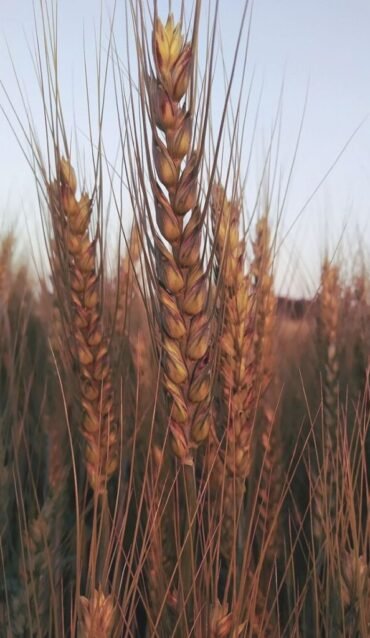
In places like the Danube River basin, winter wheat became a lifeline. It didn’t just produce high yields, it brought reliability. In tough years, it gave communities a buffer against hunger. It made agriculture more resilient.
Even in the Americas, both Indigenous farmers and early settlers saw its potential and integrated wheat into their evolving food systems.
A Grain That Shaped Global Cuisine
But wheat’s biggest triumph? It wasn’t just in the field, it was at the table.
From Middle Eastern flatbreads and Italian pastas to Chinese hand-pulled noodles, French sourdoughs, Indian chapatis, and Mexican tortillas. Wheat adapted to every kitchen it entered. Cultures didn’t just accept it. They made it their own.
No other grain has inspired such a global range of foods. It’s flexible, satisfying, and easy to store, a dream for both cooks and farmers.
So, with a story this rich, you’d think wheat would be universally celebrated. And for most of history, it was.
In recent years, something’s changed. Somehow, this ancient staple has become controversial. It’s been accused of causing health problems, hiding secrets, even fuelling conspiracy theories.
Yep! Wheat has a plot twist.
Let’s talk about that next.
The Wheat Conspiracy
Why Wheat Is So Much Work, And So Worth It
Rice and wheat are two of the most important staple foods on the planet. But if you’ve cooked with them, you know they couldn’t be more different.
Rice is simple. You cook it in water. Done.
Wheat? Not so much. It’s way too tough to eat in its raw form. First, you have to grind it into flour. Then you mix that flour with water, knead it into dough, and often ferment it. Only after all that effort does it become the chewy bagels, silky noodles, flaky pastries, pillowy pita, or crusty sourdough we know and love.
Yes, it’s more work, but that’s exactly what makes wheat so incredible.
The Secret Ingredient: Gluten
Wheat’s real magic comes down to one word: gluten.

When wheat flour is mixed with water, two special proteins, gliadin and glutenin, link together to form gluten. This stretchy, elastic network works like edible glue. It traps air, gives dough structure, and creates the perfect texture for everything from fluffy loaves to delicate pasta.
Other grains like barley and rye also contain gluten proteins, but wheat has the perfect combo for strong, workable dough. That’s why you can make a beautiful baguette from wheat, but not from rice, which lacks this elastic structure.
Bread was likely the first big wheat-based invention. Archaeologists have even found evidence of flatbreads dating back over 14,000 years, long before organised farming began.
But the game really changed when someone discovered how to use yeast.
This tiny fungus made dough rise into soft, airy loaves. From that moment on, wheat became more than just fuel, it became comfort, culture, and craft.
For thousands of years, gluten was just part of the story.
Then came 2011.
The Book That Started a Backlash
That year, American cardiologist Dr. William Davis published Wheat Belly, and the conversation around wheat took a sharp turn.
Davis didn’t just raise a few concerns. He launched a full-on attack.
According to Wheat Belly, wheat wasn’t just unhealthy. It was addictive, inflammatory, and possibly the hidden culprit behind everything from obesity and diabetes to cancer and dementia.
His message was loud and clear: if you want to be healthy, cut out wheat. All of it.
The book struck a nerve. It hit the New York Times bestseller list and stayed there for nearly two years. Wellness influencers, celebrities, and athletes jumped on board. Suddenly, people were side-eyeing their morning toast and questioning their sourdough starter.
“Modern Wheat” and the Rise of Frankenwheat
What made Davis’s argument even more persuasive was a twist: he didn’t blame wheat in general. He blamed modern wheat.
He claimed that since the 1960s, scientists had “genetically altered” wheat into a new, harmful version. He pointed to the shorter, stockier wheat now seen in fields, less than thigh-high compared to the tall stalks of the past. And warned that this wasn’t just a visual change. He argued it represented a deeper chemical shift that could be damaging our health.
This idea of “Frankenwheat” caught on quickly. After all, it offered a simple explanation for why so many people were feeling tired, bloated, or unwell.
But is there truth to the claim?
What Really Happened to Wheat
It’s true that wheat changed dramatically in the mid-20th century. During the Green Revolution, scientists developed semi-dwarf wheat: shorter, sturdier plants that resisted wind and produced much higher yields. These changes helped prevent famine in countries like India and Mexico and transformed global food security.
But here’s the important part: these newer wheats were not genetically modified in the modern sense. No genes were added from other species. They were created using selective breeding and hybridisation, techniques humans have been using for thousands of years to improve crops.
And despite Davis’s warnings, there’s no strong scientific evidence that modern wheat varieties are more harmful than traditional ones. Most major health institutions, including the Mayo Clinic and Harvard’s School of Public Health, agree that unless you have celiac disease or a diagnosed gluten sensitivity, there’s no medical reason to avoid wheat entirely.
Still, the theory stuck. It offered something emotionally satisfying: a villain. When people are frustrated by vague symptoms or overwhelmed by rising rates of chronic illness, it’s tempting to blame something specific, especially something as widespread and familiar as wheat.
But before we toss out the toast or cancel the croissant, let’s pause.
Because the real science of wheat and your body? It’s far more interesting, and far less scary, than you’ve been told.
Nobel Prize Wheat and the Truth About Gluten
When Wheat Belly hit the shelves, it didn’t just cause a stir, it sparked a full-blown food panic. But many scientists and nutrition experts were quick to respond, challenging the claims made by Dr. William Davis. Their main concern? His theory wasn’t rooted in solid science.
Has Wheat Really Changed?
Researchers dove into the data, comparing wheat strains from the 1800s to those we grow today. And while it’s true that modern wheat has been bred for higher yields and better resistance to pests and weather, the core components: like gluten structure and protein makeup, haven’t changed in any dramatic way that could explain the rise of modern diseases.
Then what about Davis’s claim that wheat became suspiciously short? It turns out, there’s nothing shady about that either.
Enter: The Green Revolution
The shorter wheat Davis refers to actually comes from a plant variety called Norin 10, first developed in Japan. After World War II, it made its way to the U.S., where agricultural scientist Norman Borlaug used it to develop hardy, semi-dwarf wheat strains. These shorter plants were stronger, more weather-resistant, and far more productive.
In the 1960s, this breakthrough helped countries like India and Pakistan dramatically increase their wheat production, essentially staving off mass famine. It’s estimated that these innovations helped save over a billion lives. For this, Borlaug was awarded the Nobel Peace Prize in 1970.
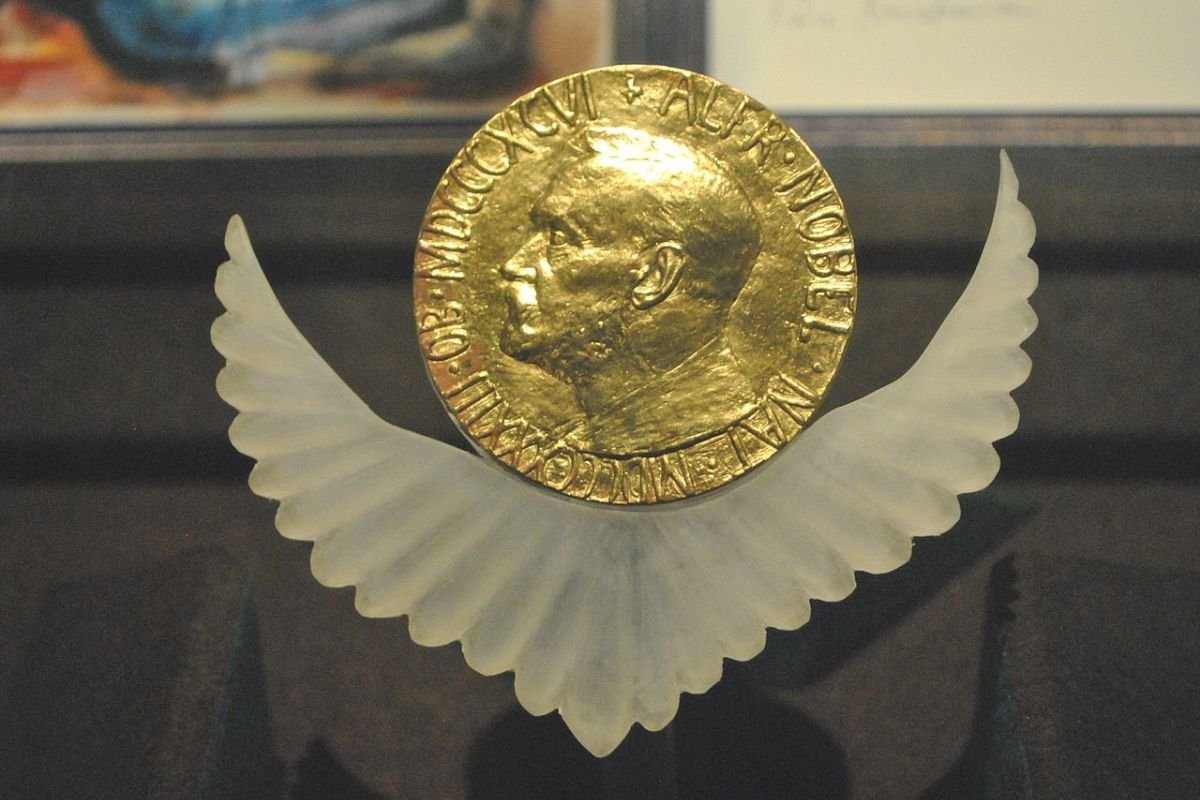
And yet, in Davis’s version of events, these life-saving crops somehow turned into a “slow poison.” That twist has left many people scratching their heads.
The Real Risks of Gluten
Let’s be clear, wheat isn’t for everyone. Some people have real, medically diagnosed conditions like celiac disease, an autoimmune disorder triggered by even trace amounts of gluten. Others may have non-celiac gluten sensitivity, which can cause discomfort even without a clear test result. These conditions are real and valid.
But they’re also rare. Celiac disease affects about 1% of the global population. Gluten sensitivity is harder to pin down, but it still only affects a small portion of people. The vast majority of us can, and do, eat wheat every day without any trouble. Think bread, pasta, pancakes, dumplings… wheat is everywhere.
If wheat were truly to blame for 70–80% of all modern diseases, as Davis claimed, we’d be facing a global health catastrophe. Hospitals would be flooded, and the world’s most wheat-loving regions, like Europe, North America, and large parts of Asia, would be in serious trouble.
Why Did So Many People Believe It?
The truth is, Davis struck a nerve. He tapped into growing fears about modern food, chronic illness, and corporate influence. He offered something rare in a complex world: a simple explanation and a clear villain. Just stop eating wheat, and everything will get better.
It’s tempting. Especially when you’re tired, sick, or searching for answers.
But here’s the thing: science rarely deals in neat little packages. Real health advice isn’t about fear, it’s about balance. It’s about listening to your body, looking at the evidence, and making choices that work for you.
Wheat isn’t perfect. No food is. But turning it into a scapegoat doesn’t do anyone any favours, especially when the full story is so much more interesting.
Wheat Isn’t the Enemy, But Context Matters
So, where does all this leave us?
For most people, wheat has been a safe, nutritious, and versatile staple for thousands of years. Whole wheat, especially, offers benefits that many modern diets are missing: like fiber, B vitamins, iron, and magnesium.
The Problem Isn’t Wheat, It’s What We’ve Done to It
But here’s the catch: not all wheat products are created equal.
The concern isn’t usually with wheat itself, but with the way we process and eat it today. Highly refined wheat products, like white bread, instant noodles, sugary cereals, and ultra-processed snacks, can spike blood sugar, lead to cravings, and leave us feeling tired or bloated. But that’s not unique to wheat. The same thing happens with any food that’s been stripped of nutrients and pumped full of additives.
So, the real question isn’t just if you eat wheat. It’s how you eat it, and how often.
Wheat Can Be a Nourishing Part of a Healthy Diet
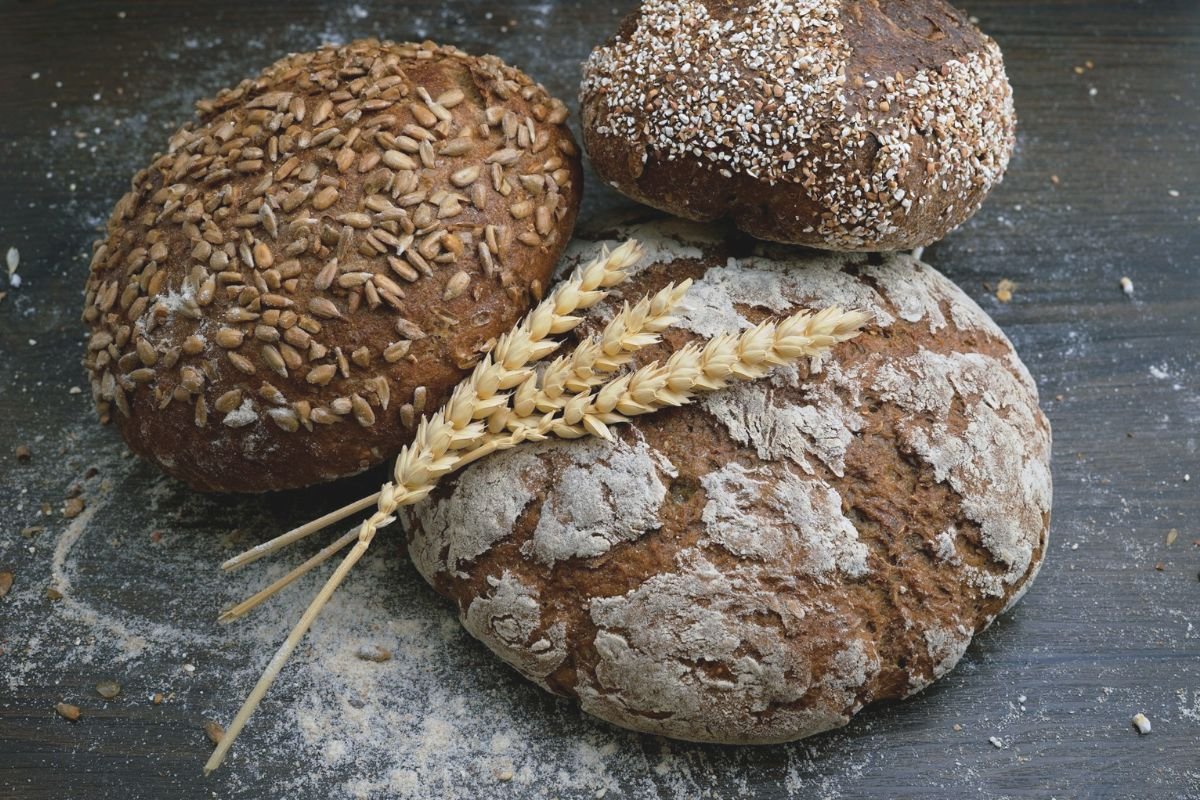
When we choose wheat in its whole, minimally processed form, it can absolutely be part of a balanced lifestyle. Think: whole grain breads, homemade pastas, wheat berries in salads, or freshly baked flatbreads made with just a few simple ingredients. These kinds of foods bring nourishment, not just carbs.
Listen to Your Body, Not the Fear
Of course, if you notice you feel bloated, foggy, or fatigued after eating wheat, that’s worth exploring. Your body is the best expert on your health. Maybe it’s worth trying an elimination diet or getting tested for celiac disease or gluten sensitivity. But there’s a difference between making thoughtful adjustments, and cutting out an entire food group based on internet panic or popular trends.
Health Isn’t About One Ingredient
It’s tempting to look for a single culprit or a miracle fix when we don’t feel well. But real health isn’t that simple. It’s built on patterns, not one ingredient. How you sleep, move, eat, think, and connect with others all shape how you feel.
So maybe instead of asking “Is wheat bad?”, the better question is:
“What actually nourishes me?”
What leaves you feeling energised, clear-headed, and truly well?
That’s where real health lives. Not in fear, but in understanding.
Image Credits and Attributions
Triticum boeoticum (Wild Einkorn Wheat)
Photo by LepoRello, via Wikimedia Commons.
Licensed under CC BY-SA 3.0.
Triticum dicoccum (Emmer Wheat)
Photo by Rasbak, via Wikimedia Commons.
Licensed under CC BY-SA 3.0.
Map of the Fertile Crescent
Image by Nafsadh, via Wikimedia Commons.
Licensed under CC BY-SA 3.0.
Triticum aestivum (Common Wheat)
Photo by Ibu Petrovic, via Wikimedia Commons.
Licensed under CC BY-SA 4.0.
Nobel Peace Prize Medal
Photo by ProtoplasmaKid, via Wikimedia Commons.
Licensed under CC BY-SA 4.0.