Aphantasia: Some People Cannot Picture Anything in Their Mind

23 JUNE 2026
Aphantasia and the Strange Reality of Seeing Nothing in Your Mind
Most of us understand blindness as the inability to see the physical world through our eyes. But there is another kind of blindness that has nothing to do with eyesight at all.
Some people experience aphantasia, a condition where the mind cannot form mental images internally.
Even with their eyes closed, they cannot picture a face, a childhood memory, or something as simple as an apple. Their thoughts may still contain ideas, facts, and descriptions, yet no actual visual image appears. For them, the mind’s eye stays blank.
This experience is sometimes described as “mind blindness” or the inability to visualise mentally.
For many people, the idea sounds almost impossible to imagine at first.
After all, when someone says, “Picture this in your mind,” most of us assume everyone experiences imagination in roughly the same way. But human beings experience thought, memory, and imagination far more differently than most of us realise.
Try This Simple Experiment
Before going any further, try a small experiment.
Close your eyes for a moment. Really close them.
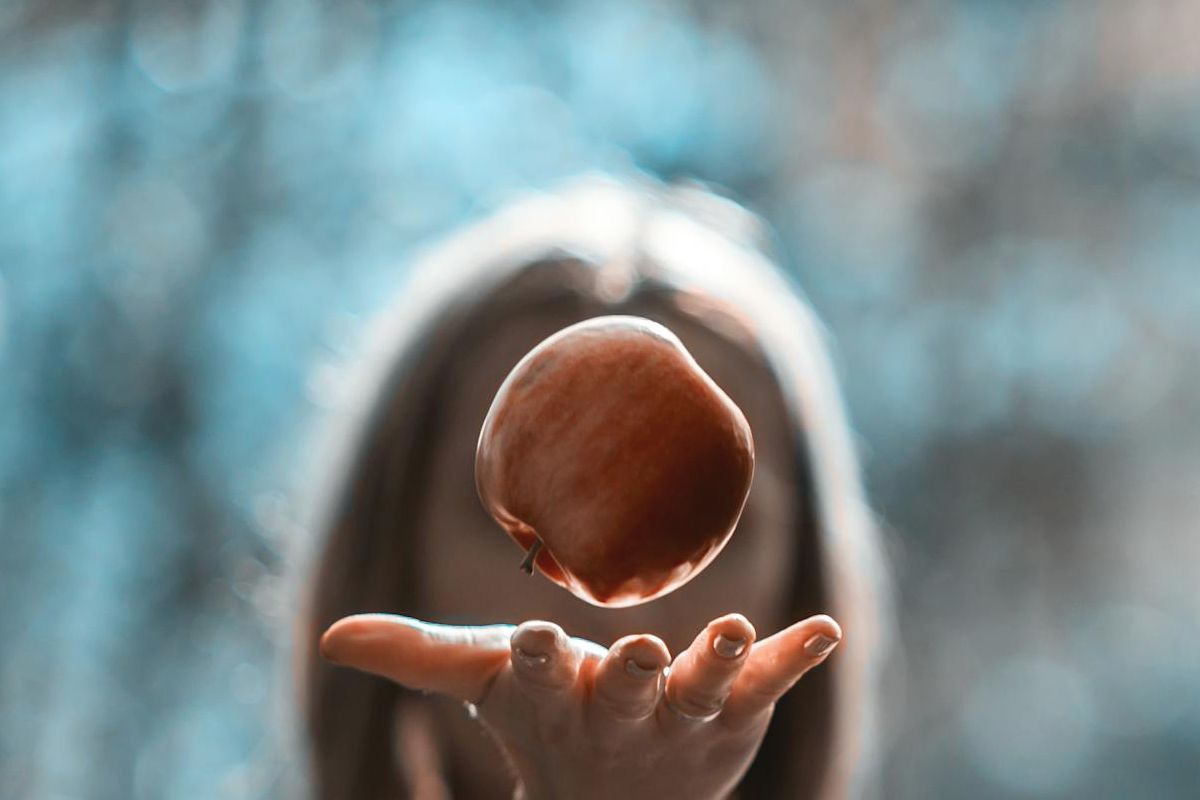
Now imagine a bright red apple floating in front of you. The colour is rich and vivid. Suddenly, the apple slips from the air, falls to the ground, and the moment it hits the floor, it transforms into a banana.
Take a second before opening your eyes.
Could you see it?
Not with your physical eyes, of course, but somewhere inside your mind. Could you picture the apple falling? The flash of colour? The banana appearing afterward?
Some people can see scenes like this almost as clearly as watching a film. Others experience only faint outlines or scattered impressions. And some people see absolutely nothing at all.
If you could not picture the scene mentally, you are not alone.
When the Mind Cannot Create Mental Images
For people with aphantasia, imagination works very differently.
They may still understand exactly what an apple looks like. They know its colour, shape, texture, and taste. They can describe it perfectly well. But they cannot voluntarily “see” it in their minds.
To many people, discovering this difference comes as a genuine shock.
Someone with vivid mental imagery may assume everyone experiences imagination the same way they do. Meanwhile, a person with aphantasia may go through life never realising that other people can actually visualise things mentally.
And that is perhaps the most fascinating part of all.
We can live side by side, have the same conversations, read the same books, and look at the same world, while experiencing our inner lives in completely different ways.
Discovering Aphantasia and How Other Minds Work Differently
Aphantasia is often described as the absence of visual imagination. But that description can be misleading if taken too literally.
People with aphantasia can still be highly creative, emotionally expressive, imaginative, and intelligent. They can tell stories, solve problems, create art, and feel deep emotional connections. The difference lies specifically in their ability to form voluntary mental images.
Researchers estimate that somewhere between 1% and 4% of people may experience some degree of aphantasia, though scientists are still learning how common it truly is.
The phenomenon itself is not new.
In fact, it was first discussed in the 1800s by scientists such as Francis Galton. But for more than a century, it remained relatively overlooked. Then, in 2015, British neurologist Adam Zeman and his colleagues brought renewed public attention to the condition through research into visual imagination and cognitive differences.
Suddenly, thousands of people began encountering a word that described something they had experienced their entire lives.
Dreams Without a Mind’s Eye
One of the most fascinating discoveries from these studies was that some people with aphantasia could still experience involuntary mental imagery.
They might dream vividly while asleep or experience occasional flashbacks. Yet when awake, they could not intentionally create mental pictures on command.
This contrast becomes even more fascinating when exploring Want to Control Your Dreams? Here’s How Lucid Dreaming Works and the strange ability some people have to become aware inside their dreams while asleep.
One participant described it in a way that deeply surprised researchers and readers alike.
While dreaming, he could see vivid scenes much like anyone else. Researchers still do not fully understand why dreaming can remain visually rich in some people with aphantasia, especially considering the 9 Types of Dreams people experience during sleep.
But during waking life, nothing appeared in his mind visually. When he closed his eyes, there were no hidden pictures waiting behind them. Only darkness.
What shocked him most was discovering that other people genuinely could “see” things in their minds.
Whenever someone said, “Imagine an apple,” or “picture a beach,” he had always assumed they were speaking figuratively. He never realised they were describing an actual internal experience.
And honestly, many readers may be having the same realisation right now.
The Invisible Difference Most People Never Notice
That is part of what makes aphantasia so fascinating.
Most people who have it do not grow up feeling unusual. Why would they? Their experience feels completely normal because it is all they have ever known.
So when films show characters replaying memories in vivid detail or imagining elaborate scenes internally, people with aphantasia may simply assume it is a dramatic storytelling device rather than something many people genuinely experience.
Often, the discovery happens unexpectedly.
A conversation with a friend. A late-night article online. A social media discussion. Suddenly, a person realises the phrase “mind’s eye” was never just a metaphor.
And perhaps that is what makes this topic feel unexpectedly emotional.
Something as simple as imagining an apple can reveal how differently human beings experience reality inside their own minds.
Aphantasia, Memory, and Remembering Without Pictures
So how are people with aphantasia different from everyone else?
The answer is not as simple as people either having imagination or not having it.
Mental imagery exists on a spectrum. Some people can create vivid, cinematic scenes in their minds with astonishing detail. Others experience only blurry impressions or conceptual thinking without visuals. People with aphantasia sit at the far end of that spectrum, where voluntary visualisation is absent or extremely limited.
This difference can shape the way memory works.
Many people naturally recall the past by mentally replaying it. They might picture a childhood bedroom, a friend’s face, or the expression someone had during an important conversation. Memory, for them, often arrives with visual detail attached.
For someone with aphantasia, memory recall may work differently.
Instead of mentally revisiting scenes visually, they may remember through facts, emotions, concepts, or descriptions. Rather than internally seeing a friend’s face, they may simply know the person has curly hair, glasses, or a recognisable smile.
Because of this, some people with aphantasia describe autobiographical memory as feeling less visually vivid. But that does not necessarily mean they have poor memory overall. Many have excellent recall for information, patterns, language, or emotional meaning.
Their minds simply process experience differently.
Creativity Without Visualisation
One of the biggest misconceptions about aphantasia is that it limits creativity.
It does not.
People with aphantasia can still be deeply artistic, inventive, and imaginative. Many work successfully in creative fields such as writing, design, music, animation, engineering, and science. Creativity is far more complex than simply producing pictures in the mind.
In fact, some well-known individuals have publicly spoken about having aphantasia, including Edwin Catmull, former president of Pixar and Disney.
Others, including Kobe Bryant and Glen Keane, are sometimes mentioned in online discussions surrounding aphantasia, though those claims are less firmly confirmed.
What these examples highlight is something important.
Human imagination is not built from a single mental process. There are many ways to think, invent, create, and experience the world internally.
How Aphantasia May Affect Memory and Emotion
Some researchers and individuals with aphantasia have also noticed possible emotional differences connected to mental imagery.
Because painful memories may not replay visually in the same vivid way, certain experiences can sometimes feel less visually intrusive. A difficult moment may still carry emotional weight, but without the intense mental replay many others experience.
Of course, experiences vary greatly from person to person. Not everyone with aphantasia experiences memory or emotion in the same way.
Still, it raises an interesting question.
How much of our emotional world is shaped not only by what happens to us, but by the way our minds reconstruct those experiences afterward?
The Apple in Your Mind
Perhaps the most important thing to understand is that aphantasia, often described as mind blindness, is generally not considered a disease or mental illness. It is better understood as a natural variation in how human beings experience thought, memory, and imagination.
And maybe that is what makes this topic so unexpectedly moving.
At the beginning of this article, you were asked to picture a red apple falling to the ground and turning into a banana. For some readers, that scene may have unfolded vividly, almost like watching a short film inside the mind. For others, there may have been only fragments, concepts, or perhaps nothing visual at all.
Yet everyone still understood the story.
That alone says something deeply human about the mind.
We move through the same world carrying entirely different inner experiences, often without ever realising it. And sometimes, discovering those invisible differences can make us see one another with a little more curiosity, humility, and wonder.
Explore More About the Mind and Imagination:
People Also Ask
Frequently Asked Questions About Aphantasia
What is aphantasia?
Aphantasia is a condition where a person cannot voluntarily create mental images in their mind. People with aphantasia may understand concepts, memories, and descriptions normally, but they cannot visually picture things internally using the mind’s eye.
Can people with aphantasia dream?
Yes. Many people with aphantasia still experience visual dreams while asleep. Some can also experience involuntary mental imagery, such as flashbacks, even though they cannot intentionally visualise mentally while awake.
Is aphantasia a mental illness?
No. Aphantasia is generally not considered a mental illness or disease. Researchers describe it as a natural variation in how the brain processes mental imagery, memory, and imagination.
How common is aphantasia?
Researchers estimate that around 1% to 4% of people may experience some degree of aphantasia, although scientists are still studying how common the condition truly is.
Can people with aphantasia still be creative?
Absolutely. People with aphantasia can still be highly creative, artistic, and imaginative. Many work in creative fields such as writing, music, design, animation, engineering, and science.
Do people with aphantasia have poor memory?
Not necessarily. While some people with aphantasia may experience less visually vivid autobiographical memory, many have excellent memory for facts, concepts, language, emotions, and patterns.
What does aphantasia feel like?
For many people with aphantasia, trying to imagine something visually feels blank or dark. They may understand what an object looks like conceptually, but no actual mental picture appears in their mind.
How do people discover they have aphantasia?
Many people discover they have aphantasia through conversations, online discussions, or articles about mental imagery. Often, they are surprised to learn that other people can genuinely “see” images in their minds.