How to Slow Ageing Naturally Through Circulation and Daily Habits
07 APRIL 2026
The Hope of Staying Younger for Longer
When people think about how to slow ageing, most imagine dramatic solutions or cosmetic treatments. Yet most people simply hope their bodies will continue working well for as long as possible, or at the very least, that the pace of ageing can be softened over time.
Without turning to cosmetic medicine, is that hope unrealistic?
Today, let us talk about whether rejuvenation is something we can genuinely work towards. Not as a promise to reverse time, but as a way of supporting the body so it can age with less strain.
A Question Worth Asking
Is there a simple method for rejuvenation?
Perhaps not in the way advertisements suggest. But there are practical, often overlooked ways to support the body that matter more than we realise.
One of the most ignored is also the simplest: water.
How Hydration Supports Healthy Ageing
We already know that water supports nearly every system in the body. It helps with circulation, nutrient transport, temperature regulation, and cellular activity. Drinking enough water each day matters. Yet many people never connect hydration with how young or worn down they feel physically.
For men and women who are long past menopause, drinking more water will not reverse ageing. That much is clear. But can it meaningfully support the body and slow visible and physical decline? Very possibly.
Many women spend large sums on moisturising products, hoping for skin that looks plumper, smoother, and less lined. Topical products can protect the skin’s surface, but they cannot compensate for dehydration inside the body. Hydration starts internally. The body must absorb enough water to support circulation, cellular function, and tissue repair, alongside the role digestion and gut health play in helping the body use nutrients effectively.
This means drinking sufficient quantities of good-quality water consistently, not just when we feel thirsty.
Why Hydration Becomes More Important With Age
It is often said that water makes up around 70 percent of a child’s body weight, about 60 percent in adults, and closer to 50 percent in older people. These numbers vary from person to person, but the pattern is broadly accurate. As we age, total body water tends to decline.
This happens partly because of changes in muscle mass, kidney function, and thirst signals. In everyday life, many older adults are chronically under-hydrated without realising it.
This doesn’t mean ageing automatically makes us dry and worn out. It does mean that maintaining hydration becomes more important, not less. When cells are properly hydrated, metabolic processes tend to run more smoothly, circulation improves, and tissues receive better support.
That alone will not stop ageing. But it does help the body cope with it.
How Vitamin C Supports Repair and Healthy Ageing
When people talk about rejuvenation, vitamin C often enters the conversation, and for good reason. Vitamin C plays a central role in collagen production. Collagen helps maintain skin structure, but its importance goes far beyond appearance.
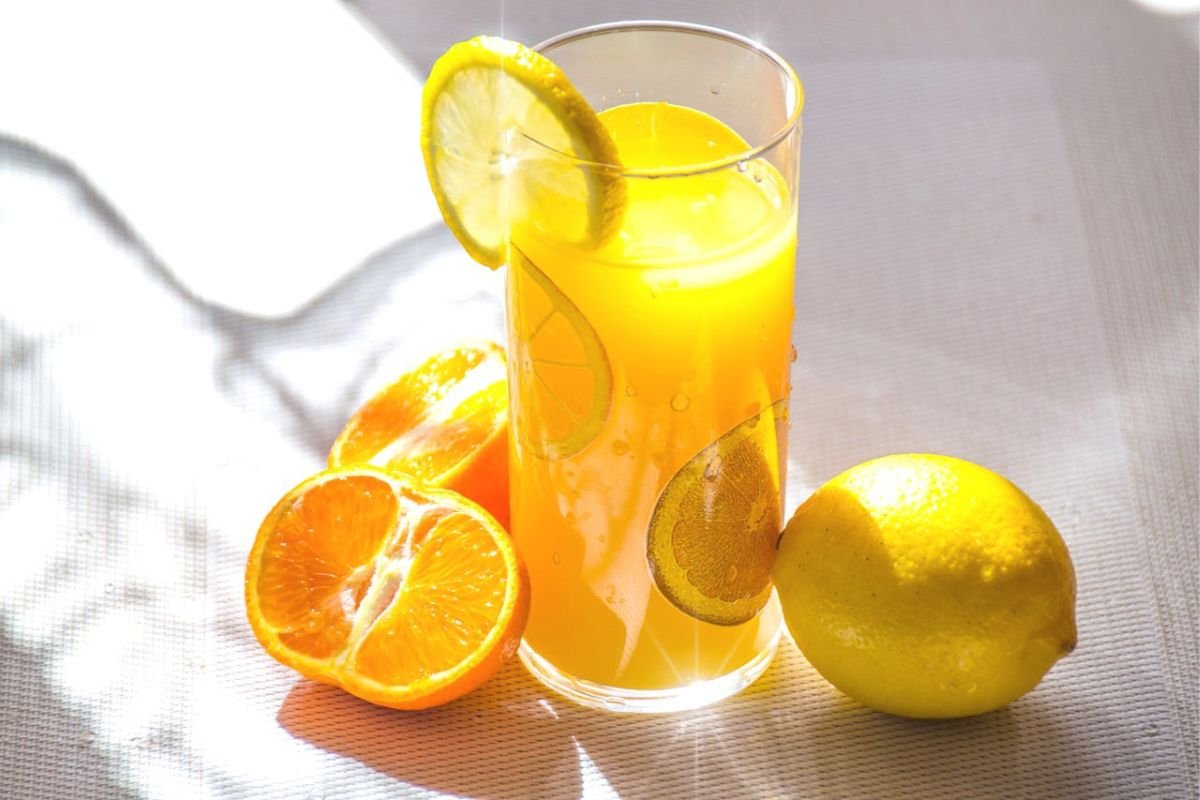
It supports joints, tendons, cartilage, and connective tissue. Ageing does not only show up as wrinkles. It appears as knee pain, joint stiffness, slower recovery, and reduced resilience.
As we age, collagen turnover slows. Without proper nutritional support, repair cannot keep up with daily wear. Vitamin C does not rebuild the body on its own, but without it, collagen production suffers. For this reason, understanding the role of vitamin C in the body helps explain how daily nutrition supports long-term repair and resilience, and why maintaining a steady intake through diet, and supplementation when needed, helps sustain the body’s ongoing repair processes.
When repair slows and damage accumulates, discomfort increases and movement becomes harder. Supporting collagen production through diet and lifestyle isn’t about reversing time. It’s about narrowing the gap between breakdown and repair.
What Happens to Cells During Ageing
Another important part of ageing takes place at the cellular level, within our DNA. This is not speculation. It has been studied extensively, including in Nobel Prize recognised research.
At the ends of our chromosomes are structures called telomeres. Their role is to protect genetic information during cell division. Each time a cell divides, telomeres shorten slightly. Over decades, this limits how many times cells can renew themselves effectively.
New cells are not damaged copies in an obvious way, but they have less capacity for repair. This helps explain why tissues heal more slowly with age and why energy levels often decline.
The cells you have now are not the same ones you had at ten years old. Their ability to regenerate is different. That is a natural part of being human.
What matters is that this process does not run at only one speed.
How Daily Habits Can Slow Ageing
Research suggests that lifestyle factors such as nutrition, sleep quality, stress management, and physical activity can influence how quickly telomeres shorten. Some medical approaches are also being explored, though many remain experimental.
The goal is not immortality. Death is inevitable. But slowing cellular decline allows people to remain closer to their current physical and mental capacity for longer. This also helps explain why ageing can feel more unsettling than death, as the experience of gradual decline often carries more emotional weight than the end itself, compared to a more sudden final stage.
Rejuvenation, then, is not about turning back the clock. It is about slowing its pace, giving the body better conditions to repair itself, and extending the years in which life still feels physically capable and mentally present.
Analysing the Four Cyclical Stages of Human Life
The human lifespan can be loosely divided into four broad stages. For simplicity, we can use an 80-year lifespan as a reference point. This does not suggest everyone lives to 80, but statistically it offers a useful framework for understanding long-term patterns.
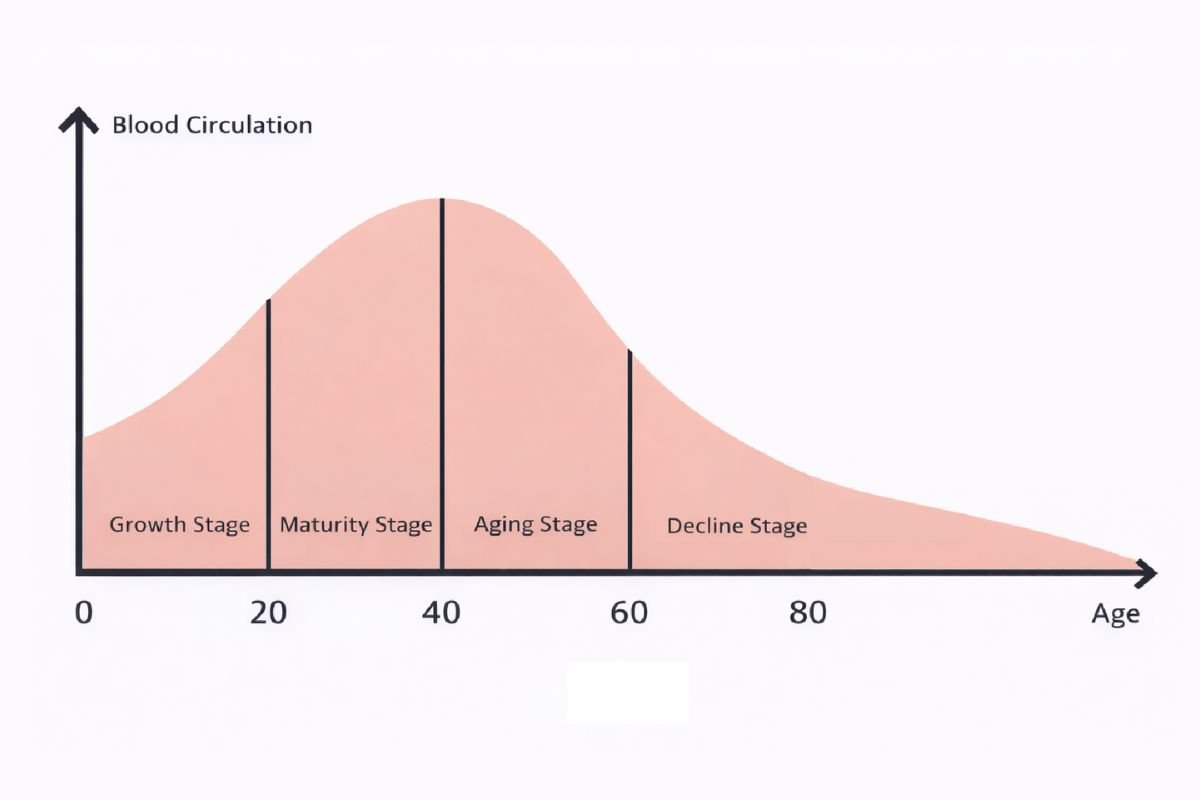
From birth to around 20 is the growth stage. From 20 to 40 is commonly described as the maturity stage. From 40 to 60 is often experienced as early ageing, and from 60 to 80 is what many recognise as the later decline stage.
These divisions are not rigid. They blur at the edges and vary between individuals. Still, they help us make sense of how the body tends to change over time.
Circulation, Vitality, and the Ageing Process
The diagram shows a bell-shaped curve representing overall physiological vitality, described here as blood circulation or microcirculation. Circulation is only one part of the picture, but it reflects something important: how efficiently oxygen, nutrients, hormones, and immune cells are delivered throughout the body.
When circulation is strong and responsive, repair is easier, energy is more stable, and recovery feels natural. As circulation becomes less efficient, the body must work harder to achieve the same results.
Early Life: Energy Without Resilience
In early childhood, people tend to fall ill more often. This isn’t because circulation is weak, but because the immune system is still developing. The body is growing rapidly, yet its defences are learning through exposure.
Energy is abundant, but resilience is uneven. Children bounce back quickly in some ways, yet are vulnerable in others. Growth demands enormous resources, and the body prioritises development over durability.
Early Adulthood: Peak Repair and Recovery
Then comes a phase of rapid physical growth followed by increasing resilience. By the late teenage years and into the twenties, recovery often feels effortless. Around the age of 20, many people notice that one good night’s sleep can undo days of poor rest.
Minor injuries heal quickly. Muscles recover fast after strain. This reflects peak repair capacity, efficient circulation, balanced hormones, and strong cellular turnover working together.
It isn’t that life is easier at this stage. It’s that the body absorbs stress more easily and restores itself with less effort.
Midlife: Strength With Awareness
By around 40, many people remain close to their physical peak. Strength, endurance, and coordination can stay high, particularly with regular movement and supportive lifestyle choices. Circulation and metabolic efficiency remain strong, even if recovery is no longer instant.
This stage often feels like a balance point. Experience has accumulated, and the body still cooperates. There is awareness of limits, but also confidence in capability.
When Ageing Becomes Noticeable
From 40 to 60, signs of ageing tend to become clearer. Wounds heal more slowly. Muscle mass and bone density begin to decline. Eyesight may change, and recovery after physical or mental strain takes longer. Hair thinning becomes more common.
Circulation does not suddenly fail, but blood vessels gradually lose flexibility, and hormone production begins to change.
Hormonal changes are especially noticeable for women during this stage. Menstruation gradually stops, and menopause marks the end of reproductive capacity. Falling oestrogen levels influence bone density, skin elasticity, temperature regulation, and mood. Men experience hormonal changes too, though they often occur more gradually.
Why Circulation Matters as We Age
Hormones and circulation are closely linked. Healthy circulation supports hormone delivery and tissue responsiveness, even though it cannot stop hormonal change itself.
What it can do is reduce the speed and severity of functional decline. Long-term habits that support circulation, such as regular movement, sufficient hydration, and metabolic stability, can help flatten the downward curve. The body may not stay young, but it can remain capable.
Ageing is unavoidable. But the pace at which it unfolds is not fixed.
Later Years: Preserving What Still Works
From 60 to 80, the decline phase often becomes more noticeable. Chronic conditions that are harder to reverse become more common. Not solely because circulation weakens, but because cumulative cellular wear, immune ageing, and reduced repair capacity begin to overlap.
Healing slows further. Recovery from illness or injury takes longer, and reserves are more limited.
This is precisely why supporting circulation and overall physiological resilience matters most in later years. As physical changes become more noticeable, maintaining supportive relationships as we grow older becomes just as important as caring for the body itself over time. Alongside this, medical care often steps in once symptoms appear, but prevention and early support help extend the years in which life remains functional.
The aim is not to deny decline. It is to delay it, soften its slope, and preserve strength, mobility, and clarity for as long as possible.
Youthfulness, in this sense, is not defined by age. It is defined by how well the body continues to support life as the years move forward.
A Small Habit With Long-Term Consequences
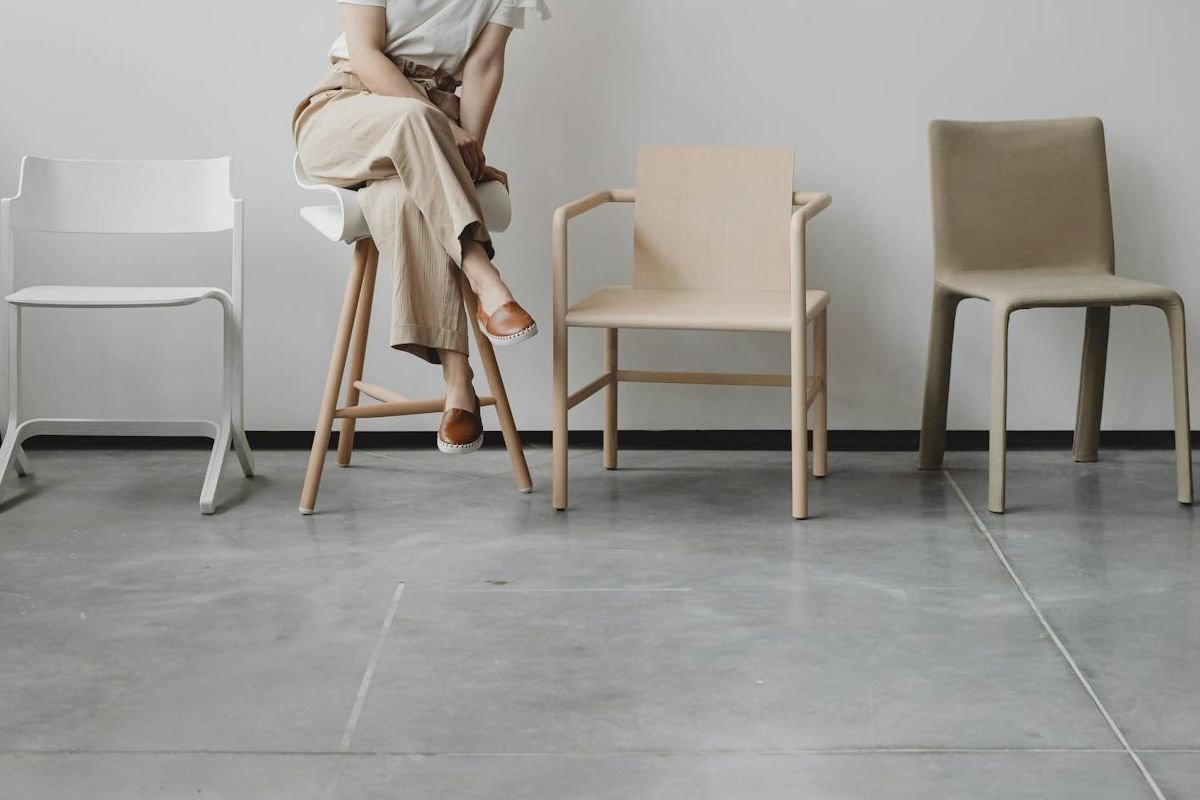
To put it simply, frequently crossing your legs is not ideal.
Crossing your legs occasionally is harmless. Most people do it without thinking. The issue arises when it becomes a habitual posture held for long periods. When the hips, knees, and pelvis are repeatedly placed in uneven positions, muscles and joints adapt to that pattern. Over time, posture and joint alignment can shift, contributing to stiffness or discomfort later on.
How Asymmetry Builds Strain
Leg crossing does not damage joints overnight. Rather, it encourages uneven loading. The body works best in balance, and when one side consistently carries more compression or tension, strain accumulates slowly.
The lower back, hips, and knees are especially vulnerable because they function as an integrated system. A small imbalance at the hips can make its way upward into the spine and downward into the knees, particularly with prolonged sitting.
Joints, Movement, and Circulation
Joint health depends heavily on circulation and nutrient delivery. Joints are cushioned by cartilage, a smooth tissue that reduces friction between bones. Inside each joint capsule is synovial fluid, which lubricates and nourishes that cartilage. This fluid is not pumped like blood. It relies on movement to circulate.
When joints stay static for long periods and circulation slows, synovial fluid exchange also slows. Over time, lubrication efficiency declines, friction increases, and wear accelerates. Regular movement supports joint health by stimulating circulation and refreshing this fluid.
Repair Still Needs Support
Cartilage maintenance also depends on collagen, which in turn requires vitamin C. Without enough vitamin C, collagen repair becomes less efficient. Yet vitamin C alone cannot help if it does not reach the tissues that need it.
This is where circulation becomes central again. Nutrients must be delivered, waste products removed, and repair supported. Joint resilience in later years reflects decades of how well these systems have been supported.
Many joint problems that appear with age are not caused by one habit, but by years of reduced movement, limited circulation, and slower repair working together.
Small Daily Habits That Support Healthy Ageing
The message here is simple. Sit in ways that feel balanced. Change position often. Move your joints regularly. Support circulation and repair through daily habits.
Small choices repeated over years shape how the body feels later on. Comfort in ageing is rarely built through dramatic interventions. It is built through ordinary care.
Reflective Closing Section
Slowing the Curve, One Choice at a Time
Learning how to slow ageing is less about chasing youth and more about supporting the body consistently over time.
What it responds to is consistency. Hydration. Movement. Nutrition. Rest. Circulation. These are not shortcuts. They are supports.
Ageing will continue. Cells will change. Repair will slow. But the slope of that change is not entirely out of our hands. Each day offers small opportunities to make life a little easier for the body that carries us.
Rejuvenation, then, is less about chasing youth and more about staying workable. Staying comfortable. Staying able to participate fully in daily life for as long as possible.
That is a goal worth tending to, one habit at a time.
Further Reading
If you would like to explore these ideas a little further, these articles look at related aspects of ageing, health, and everyday wellbeing:
- Why growing older can sometimes feel more unsettling than the end itself → (Post 051)
- Ways to support stronger, more peaceful relationships as families grow older → (Post 014)
- How gut health and probiotics influence digestion, immunity, and daily balance → (Post 065)
- How a simple nutrient supports repair, resilience, and long-term physical health → (Post 070)
People Also Ask
Frequently Asked Questions About Slow Ageing
What is the best way to slow ageing naturally?
Slowing ageing naturally is less about reversing time and more about supporting the body’s ability to repair itself. Daily habits such as staying hydrated, maintaining good circulation through movement, eating a balanced diet, and getting enough rest all help reduce the strain placed on the body over time. These small, consistent actions can help maintain physical and mental function for longer.
Does drinking more water make you look younger?
Drinking enough water supports skin hydration, circulation, and overall cellular function. While it will not reverse ageing, proper hydration can help the skin appear healthier and reduce the effects of dryness. More importantly, it supports internal systems that contribute to long-term physical resilience.
How does vitamin C help with ageing?
Vitamin C plays a key role in collagen production, which supports the structure of skin, joints, and connective tissue. As collagen production slows with age, ensuring enough vitamin C helps the body maintain its repair processes. This contributes to better joint health, skin integrity, and recovery over time.
What are telomeres and why do they matter for ageing?
Telomeres are protective structures at the ends of chromosomes that shorten each time a cell divides. Over time, this limits how effectively cells can renew themselves. Shorter telomeres are associated with ageing and reduced repair capacity, which is why lifestyle factors that support cellular health can influence how quickly this process occurs.
Can circulation really affect how we age?
Yes, circulation plays an important role in how the body functions over time. Good circulation helps deliver oxygen and nutrients to tissues while removing waste products. When circulation slows, repair processes become less efficient, which can contribute to fatigue, slower healing, and physical decline.
Is it possible to reverse ageing completely?
No, ageing cannot be completely reversed. It is a natural biological process. However, its pace can be influenced. By supporting the body through consistent daily habits, it is possible to slow decline and maintain function and comfort for longer.
At what age does physical decline usually begin?
Physical changes can begin gradually from around the age of 40, though this varies widely between individuals. Factors such as lifestyle, nutrition, stress, and activity levels all influence how early or noticeably these changes appear.
Why is prevention more important than treatment in ageing?
Prevention helps maintain the body before significant decline occurs. While medical treatment often addresses problems after they appear, daily habits such as movement, hydration, and nutrition support the body continuously. This can extend the years in which a person remains active and independent.